Category: News

  • Duck Boat Overturns on the Charles: What Injured Passengers Should Know

    On the afternoon of Saturday, June 27, 2026, a Boston Duck Tours vehicle overturned on a boat ramp along the Charles River in Cambridge, injuring multiple passengers and sending one person to Massachusetts General Hospital. According to accounts from the Massachusetts State Police and reporting by the Boston Globe, CBS Boston, and other outlets, the duck boat had broken down while on the water and was being towed up the ramp near the Lynch Family Skate Park by a second duck boat when the tow rope snapped. The vehicle rolled backward and tipped onto its side with roughly 31 people aboard.

    Early reports described six injuries; those figures were revised upward through the day to as many as eleven, including at least one person who was trapped inside the vehicle and had to be extricated before being transported to the hospital. Witnesses described passengers tumbling into one another as the boat went over — and noted that the vehicle had no seat belts. Boston Duck Tours suspended operations for the remainder of the day and said it was reviewing the incident with the Massachusetts State Police and the U.S. Coast Guard.

    While investigators work to determine exactly what failed, passengers who were hurt are left with a more immediate question: what now?

    First steps for anyone injured

    The hours and days after a crash like this matter, both for your health and for any claim you may later decide to pursue. A few practical steps tend to make the biggest difference:

    Get medical attention, even if you feel “okay.” Adrenaline masks injuries, and the symptoms of concussions, soft-tissue damage, and internal injuries can take hours or days to appear. A prompt medical evaluation protects your health and creates a contemporaneous record connecting your injuries to the incident.

    Document everything you can. Photographs of the scene, the vehicle, the ramp, and your injuries are valuable. So are the names and contact information of other passengers and any witnesses, and any incident or report number assigned by responding agencies. If you were given paperwork at the scene or the hospital, keep it.

    Preserve your account while it is fresh. Write down what you remember: where you were sitting, what you heard, what you felt, and the sequence of events, before time and retelling blur the details.

    Be cautious with early statements and offers. Insurers or company representatives may reach out quickly. You are not obligated to give a recorded statement or to accept any settlement before you understand the full extent of your injuries.

    Talk to a personal injury attorney before signing anything. An early consultation helps you understand your rights and avoid steps that could undercut a future claim.

    Amphibious “duck boats” sit at an unusual intersection of the law. On land they behave like a vehicle; on the water they are a vessel. An incident that happens on a boat ramp, partway between the two, can raise questions about which body of law applies, including the possibility that federal maritime law governs some claims rather than ordinary Massachusetts negligence rules. That distinction can affect deadlines, available damages, and where a case must be filed, which is one reason these matters benefit from early, experienced legal review.

    Beyond the jurisdictional wrinkle, the core questions are familiar ones in any injury case. Was the equipment here, a tow rope that reportedly snapped, adequate and properly maintained? Was the disabled vehicle handled according to the operator’s own training and safety procedures? Were there warning signs that the vessel should not have been on the water, or that the recovery should have been carried out differently? Potential avenues of responsibility can extend beyond the operator to equipment manufacturers or maintenance providers, depending on what the investigation reveals.

    In Massachusetts, the general statute of limitations for personal injury claims is three years, but the maritime overlay and the involvement of a commercial operator can complicate the timeline. Acting sooner rather than later helps preserve evidence and keeps every option open.

    A pattern of safety concerns

    This is not the first time duck boats have drawn scrutiny — in Boston or nationally.

    In April 2016, 28-year-old Allison Warmuth was struck and killed by a Boston duck boat while riding a motor scooter. The NTSB’s review found the driver had turned away from the road to point out landmarks. That tragedy pushed Massachusetts lawmakers to pass a law prohibiting duck boat drivers from also serving as narrator and requiring the vehicles to be equipped with blind-spot cameras and proximity sensors. Years earlier, in 2003, a passenger named Rosemary Hamelburg fell from a Boston duck boat and later died; her family alleged the operator failed to follow its own boarding safety procedures, and Boston Duck Tours settled the wrongful-death claim for $425,000.

    The water-borne risks have been even more severe elsewhere. In 1999, the Miss Majestic sank near Hot Springs, Arkansas, killing 13. In 2018, the Stretch Duck 7 sank on Table Rock Lake near Branson, Missouri, during a sudden storm, killing 17 — one of the deadliest passenger-boat accidents in modern U.S. history. The National Transportation Safety Board has repeatedly faulted the design of these World War II–era vehicles, citing low buoyancy and fixed canopies that can trap passengers, and has criticized the U.S. Coast Guard for not acting on safety recommendations issued as far back as the 1990s. Safety advocates note that duck boats have been linked to more than 40 deaths since 1999.

    Saturday’s rollover did not end in the water, and for that everyone involved is fortunate. But the incident is a reminder that these vehicles carry real risks, and that the people most affected are paying passengers who placed their trust in an operator.

    If you were on board

    If you or a family member was injured on the Charles River duck boat, you do not have to sort through the medical, insurance, and legal questions alone. The team at Keches Law Group has decades of experience representing injured people across Massachusetts, including in complex cases involving commercial operators and overlapping areas of law. We offer free, no-obligation consultations and can help you understand your rights and options.

    Contact Keches Law Group today to speak with a member of our team.

  • 2026 Salute to Nurses Boston: Event Recap

    May 20, 2026 | The Grand, Boston

    On May 20th, Keches Law Group and The Boston Globe teamed up to host this year’s 2026 Salute to Nurses, an unforgettable evening celebrating the extraordinary men and women on the front lines of healthcare across Massachusetts.

    The Grand in Boston set the stage for a spectacular night. KISS 108’s Billy Costa emceed the event, bringing laughter, heartfelt tributes, and well-deserved recognition for some of the most dedicated professionals in the Commonwealth.

    Honoring Those Who Show Up Every Day

    Nurses don’t clock out when the shift gets hard. They stay. They advocate. They comfort patients and families during the most vulnerable moments of their lives, and they do it day after day, year after year, with remarkable grace.

    The Salute to Nurses event exists to shine a spotlight on that unwavering commitment. This year’s honorees represented hospitals, community health centers, and care facilities from across the region, each going above and beyond the call of duty. Watching these individuals take the stage to accept their recognition reminded everyone in the room just how much the nursing profession means to all of us.

    Giveaways That Had the Crowd Going Wild

    The night wasn’t just emotionally packed — it was loaded with incredible prizes. Billy kept the excitement rolling throughout the evening with a series of giveaways that had the room on its feet. Lucky attendees walked away with tickets to Jingle Ball, a coveted night out at an Ariana Grande concert, and seats to see the Boston Bruins and New England Patriots live. These nurses deserved every bit of it, and then some.

    The generosity didn’t stop there. The first 200 nurses through the doors grabbed a free pair of Hey Dudes — because if anyone deserves comfortable shoes, it’s the people who power through 12-hour shifts on their feet. Every nurse also took home a $50 Nutre Meal gift card, a thoughtful nod to nourishing the people who spend every day nourishing others.

    A Room Full of Gratitude

    The atmosphere at The Grand was electric. Nominees, their families, colleagues, and supporters packed the tables and cheered loudly all night. Pride, joy, and deep appreciation filled the room in a way that was impossible to miss.

    Nurses in the crowd shared stories of staying after their shifts to sit with lonely patients, catching subtle warning signs that saved lives, and advocating fiercely for patients who couldn’t speak for themselves. Every story drew applause, and more than a few tears.

    Thank You, Nurses

    As the evening drew to a close, one message rang clear: thank you. Thank you for your sacrifice. Thank you for your resilience. Thank you for choosing, again and again, to serve.

    To every nurse we recognized at this year’s Salute to Nurses, and to every nurse who couldn’t be in that room but shows up every single day, your community sees you, values you, and is profoundly grateful for everything you do.

    We can’t wait to do it all again next year.

    📸 Photos can be found here: https://www.flickr.com/photos/201142814@N03/albums/72177720333804589/with/55284039312

  • 40 for 40: Keches Law Group Marks Four Decades With a Landmark Ranking

    Massachusetts Lawyers Weekly names Keches Law Group 40th among the 100 Largest Law Firms in the Commonwealth as the firm marks four decades of fighting for clients and over three billion dollars recovered.

    Keches Law Group has been named the 40th Largest Law Firm in Massachusetts by Massachusetts Lawyers Weekly in its annual ranking of the state’s 100 largest firms. The recognition arrives at a particularly meaningful moment, as 2026 also marks the firm’s 40th anniversary.

    A Milestone Built Case by Case

    Since opening its doors in 1986, Keches Law Group has been committed to one mission: fighting for the rights of injured workers, accident victims, and individuals facing some of the most difficult moments of their lives. What began as a small firm in 1986 with a clear purpose has grown into one of Massachusetts’ most respected plaintiff-side practices, with offices across New England and a team of attorneys handling the area’s most complex cases.

    Being named among the 100 largest law firms in Massachusetts by Massachusetts Lawyers Weekly reflects that growth, and the trust that thousands of local residents have placed in the firm over four decades.

    What the Ranking Means

    Massachusetts Lawyers Weekly is the most respected legal trade publication in the state, and a ranking from its pages carries real credibility within the legal community, among attorneys, judges, insurance companies, and the clients who are looking for a firm they can trust.

    For Keches Law Group, this recognition is a testament to how the firm cares for its clients and their cases, with expanded resources, a growing network of experts and industry specialists, and deepened knowledge across multiple areas of law.

    40 years of Fighting for our Clients

    Keches Law Group was founded on the belief that every person deserves skilled, aggressive legal representation, regardless of who they are up against. Over 40 years, the firm has built a track record of recovering over three billion dollars on behalf of clients throughout New England, earning a reputation for taking on difficult cases and delivering results that make a real difference in people’s lives.

    That reputation is not built overnight. It is built case by case, client by client, over four decades of showing up and fighting hard for the people of Massachusetts and New England.

    Looking Ahead

    As Keches Law Group marks this milestone, the firm remains focused on what has driven it since day one, providing the highest level of legal representation to those who need it most. This recognition from Massachusetts Lawyers Weekly is a proud moment for the entire team, and a reflection of the clients who have trusted the firm with their life over the past 40 years.

  • Keches Law Group hosts Boys and Girls Club of Worcester in Suite for a Worcester Railers Hockey Game

    On Wednesday, March 11, 2026, Keches Law Group welcomed members of the Boys and Girls Club of Worcester to the DCU Center for an exciting evening of hockey, as the Worcester Railers faced off against the Norfolk Admirals. 

    Boys and Girls Club children and staff enjoyed the game from a private suite, where they had the opportunity to meet Tracks, the Railers’ mascot. The evening also included complimentary merchandise provided by Keches Law Group and the Railers, and a cameo on the DCU Center jumbotron! 

    As a proud sponsor of the Worcester Railers Junior Hockey Club, Keches Law Group is committed to supporting the Worcester community by creating opportunities for local nonprofit organizations to cheer on the Railers! 

  • Keches Law Group Secures Over $90 Million Judgment in Follow-Up 93A/176D Case for Injured Union Mason

    Boston, MA — December 1, 2025 — Keches Law Group announced today that the Massachusetts Superior Court has issued a sweeping judgment exceeding $90 million in favor of a union mason who previously won a $26.6 million jury verdict in 2021. The Court found that Peerless Insurance Company, Liberty Mutual Fire Insurance Company, and Ohio Casualty Insurance Company engaged in unfair and deceptive insurance practices in violation of G.L. c. 93A and G.L. c. 176D, warranting the imposition of punitive multiple damages.

    The judgment, still accruing interest, is among the largest reported bad-faith insurance awards in Massachusetts history.

    Background: A Pattern of Misconduct After the 2021 Verdict

    The client, a 27-year veteran mason and Local 3 Union member, suffered catastrophic spinal and orthopedic injuries while working inside an improperly constructed and OSHA-violative interior scaffold during the Longfellow Bridge rehabilitation project in Boston. A Middlesex County jury found the contractor responsible in 2021 and awarded the plaintiff $26.6 million.

    Following that verdict, Keches Law Group pursued a separate 93A/176D claim, arguing that the insurers failed to conduct a fair and reasonable investigation and continued to deny or delay resolution despite overwhelming evidence of liability.

    Court Finds Repeated and Willful Violations by Insurers

    After a 10-day bench trial, the Court found that the insurers engaged in a series of serious investigative failures, including:

    • Ignoring critical safety documents required under the MassDOT contract
    • Overlooking OSHA violations involving dangerously gapped scaffolding
    • Relying on an unreliable witness and theories unsupported by admissible evidence
    • Producing internal reports that misstated or omitted key facts
    • Failing to reasonably evaluate liability even after it was unquestionably clear

    The Court concluded that these actions constituted willful or knowing violations of Massachusetts insurance law – conduct expressly designed to protect injured people from unfair treatment by insurance companies.

    “A powerful message to insurers”

    Attorney Andrew Abraham, who tried both the original case and the 93A claim, stated:

    “This judgment sends a powerful message: insurers cannot ignore safety violations, manipulate facts, or delay justice for severely injured workers. His life was changed forever because the worksite was unsafe, and the insurers made the situation worse by refusing to deal with him fairly. Today’s decision restores accountability.”

    Abraham added:

    “Large insurance companies often believe they have a negotiating advantage over injured workers. G.L. c. 176D was designed to prevent insurers from taking advantage of seriously injured people simply because they are vulnerable. In this case, the Liberty companies were found to have acted willfully, and the punitive damages reflect that. Hopefully this judgment will ensure that the next injured person is treated fairly rather than forced to endure years of delay.”

    A Life-Changing Outcome for a Dedicated Union Mason

    The Court emphasized that the evidence overwhelmingly demonstrated that the contractor violated OSHA standards and ignored multiple safety obligations, failures that directly caused the plaintiff’s life-altering injuries. With today’s judgment, the client’s total recovery now exceeds $90 million, offering long-term stability and care for him and his family.

    About Keches Law Group

    Keches Law Group is one of the largest and most respected personal injury and workers’ compensation law firms in Massachusetts. With more than 50 attorneys and offices throughout New England, the firm has recovered billions of dollars for injured workers and families and is a leader in litigation involving workplace safety, catastrophic injuries, and insurance misconduct.

  • Gallery: Salute To Nurses 2025

    Gallery: Salute To Nurses 2025

    We were proud to take part in the Salute to Nurses 2025 celebration last week — a heartfelt tribute to the incredible nurses who care for our communities every day. This event was a small but meaningful way to say thank you.

    From dancing and conversation to powerful stories and well-deserved recognition, the evening was filled with moments we won’t forget. We’re grateful to have met so many compassionate, dedicated professionals — and we invite you to check out some highlights from the event below.

    Scroll through the gallery and help us celebrate the nurses who keep Massachusetts strong.

    5F0A4414
  • We Built This City – Celebrating the workers who keep New England going

    We’re excited to announce our We Built This City contest is now live at WeBuiltThisCity.com! Keches Law Group created this initiative to celebrate the hardworking individuals who help build, serve, and power our communities every day.

    We’re inviting everyone to nominate someone they believe deserves to be recognized—a co-worker, friend, or even themselves. The nominee with the most votes will win a prize package worth $5,000 in recognition of their hard work and dedication. See the full rules here

    Here’s how it works:

    1. Go to WeBuiltThisCity.com
    2. Submit a nomination (it’s quick and easy)
    3. Share the link and encourage others to vote

    This contest ends on May 31, 2025 so nominate someone today.

    Let’s shine a spotlight on the people who truly keep Boston and our communities running!

  • EPA Bans Last Remaining Form of Asbestos 

    EPA Bans Last Remaining Form of Asbestos 

    Workers in hazmat suits mitigate asbestos on tiles.

    Move Highlights How Lawsuits Improve Safety Measures in America 

    The U.S. Environmental Protection Agency (EPA) announced that the last remaining form of asbestos, specifically chrysotile asbestos, used in America has been prohibited, in a move that marks an important milestone for chemical safety. 

    “EPA has been working expeditiously to put the nation’s chemical safety program back on track and finally realize the protections of the 2016 law. This action is just the beginning as we work to protect all American families, workers, and communities from toxic chemicals,” said EPA Administrator Michael S. Regan. 

    How is Chrysotile Asbestos Used? 

    Chrysotile asbestos is found in automotive products like sheet gaskets and brake blocks. The use of the substance has been decreasing in the United States ever since the EPA first sought to ban some uses more than 50 years ago. 

    In addition, chrysotile asbestos is used in sodium hydroxide and chlorine, which serves to disinfect drinking water and wastewater. However, two-thirds of the chlorine produced in the United States is produced without asbestos, so transitioning away from the use of the chemical shouldn’t be difficult. 

    >> Keches Law Files Lawsuit On Behalf of Sex Trafficking Victim 

    What is Dangerous About Asbestos? 

    Asbestos exposure is known to cause lung cancer, mesothelioma, ovarian cancer and laryngeal cancer. Every year more than 40,000 deaths are linked to asbestos in the United States. 

    Why Is It Being Banned Now? 

    In 2016, Congress approved a sweeping bill that approved regulations on tens of thousands of toxic chemicals. 

    The rule banning asbestos chrysotile is a direct reaction to that result and it will be the first chemical banned under this law. 

    >> Attorney Stacey Marmorstein Recovers $1.5M for Family of Man Who Chocked to Death at Group Home  

    The Impact of Lawsuits 

    While thousands of people are affected by asbestos every year, lawsuits on behalf of the victims have brought justice and accountability. When there is a public danger that hasn’t been eliminated, taking legal action is sometimes the best option available. 

    “Personal injury lawsuits and specifically the civil justice system really have not raised the cost of anything for people and in fact, when you look at it, in the long run, they’ve actually protected people,” says Andrew Abraham, a Partner at Keches Law. “So there’s seatbelts in cars because of personal injury lawsuits. There are all sorts of improvements in your house, in your clothing, in your food, in your medications that you take, in the cars that you drive in, the lawnmowers that you use, the snowblowers that you use have been made better and safer by personal injury lawsuits.” 

    Abraham says that while there are always people and companies that are looking to take advantage of people, personal injury lawsuits offer a way to defend yourself. 

    “It’s, unfortunately, a well-hidden fact that personal injury lawsuits, generally speaking, make us safer. Holding people that choose to violate safety rules accountable is very, very important to protect our society and protect our families,” he says. 

    >> Is Your Surgeon Juggling Multiple Surgeries? 

    Keches Law is Ready to Stand Up for You 

    The skilled Workers’ Compensation and Personal Injury Attorneys at Keches Law are ready to defend you if you have been injured because of someone else’s negligence. 

    Contact us today so we can help you go through every step of the process to getting you justice and holding those who wronged you accountable. 

  • How Do I Avoid Car Accidents This Spring?

    When buds pop out on trees, flowers push through the mud and snow and you start to sneeze from the newly arrived pollen, you know that spring has arrived. 

    But with spring comes a new set of road conditions to be careful of and new safety measures to keep on alert with. Keep reading to learn how to stay safe on the road as the snow melts and the weather starts to warm up. 

    Adapt to Changing Weather Conditions 

    They don’t say “April showers, May Flowers” for nothing. And if you want to be more accurate, you should add “March mud” to the beginning of the list. Melting snow combining with hotter weather means the ground softens, and the chance of mud, rain, slush and debris on the road increases. 

    On top of that, the variety of weather conditions in spring will keep you on your toes. Be on the lookout for snowfall, thunderstorms, rain showers and anything else you can imagine. Unusual weather can make for sudden road condition changes, so be mindful of your speed, drive to the road conditions, and take your time. 

    >> How Do I Drive Safe In Snowy Weather? 

    Make Sure Your Car Is Ready for the Spring 

    Before the winter began, you checked your car to make sure you wouldn’t break down in the snow. You considered new tires or even snow tires, put an emergency kit in the trunk and had your car checked out. With the weather changing again, another checkup is in order. 

    Keeping up with regular vehicle maintenance is always the best way to make sure your car is ready for any conditions. But also, be prepared as drivers may be bolder on the street with warmer conditions and pedestrians may be walking more frequently. 

    >> 5 Motor Vehicle Safety Hazards You Might Not Know About 

    Spring Driving Hazards To Look Out For 

    In the spring, the roads are just different than what you’ve been dealing with for the last few months. Look into the new season’s problems so you are prepared and putting yourself in the safest situation you can before getting behind the wheel. 

    1. What is the Safest Way to Avoid Potholes? 

    Avoiding potholes isn’t as simple as driving around them. Sometimes avoiding them could mean driving into the other lane, and sometimes driving in them could mean potentially damaging your vehicle. So how do you handle it? 

    First of all, when you check your car this spring, make sure you look over your tires and suspension, potholes are a lot less trouble with a car prepared for them. Secondly, slow down when you see a pothole coming. Lastly, check the safety of the situation before swerving around a pothole, if a car is in the other lane, it isn’t safe. Also, note that potholes can fill with water and look like puddles, so be careful driving through puddles as well. 

    2. How Do I Avoid Hydroplaning? 

    Wet pavement leads to 1.2 million car crashes per year. Hydroplaning, which is when the car’s tires lose traction with the road and glide on the water instead, is a major contributor to the accident total. Avoiding hydroplaning involves making sure you keep traction with the road. Here are a couple quick tips to make sure you do that: 

    A. Don’t put on cruise control when its wet or raining—make sure you are in charge of the car’s movement in these moments. 

    B. Slow down and leave room so you don’t slide into another vehicle. 

    C. Finally, handle a skid properly: drive in the direction the car wants to go, let off the gas and absolutely don’t slam on the breaks or make sudden turns, this will only further add to the car’s loss of traction. 

    3. Share the Road With Pedestrians and Cyclists 

    Warmer weather means more people are out and about. More people out and about means more pedestrians and cyclists. So when you’re driving this spring, remember to be vigilant about checking crosswalks, paying attention to sidewalks and road edges, giving bicyclers room and generally paying attention to the people you share the road with. 

    4. Avoid Animals on the Road 

    In the winter, animals hide away and hibernate to avoid the weather. But come spring, wildlife like deer return to the woods and potentially, the roads. Every year about 1.5 million car accidents happen with deer alone, so keeping a watchful eye is important. 

    The hours surrounding dawn and dusk are the most active, and animals are attracted to food, so don’t throw any out the window! Also be careful of areas where a stream or waterway runs under the road, animals may look to cross nearby. 

    What Other Spring Conditions Affect Your Driving? 

    So now your car is in good working order, you know how to safely drive in weather and water, you’re patient with pedestrians, bikers and animals. But spring brings some other, unforeseen issues as well. 

    Trees, grass and weeds are all growing again. But that means pollen. If you are affected by any springtime allergies, including pollen, you know that your eyes might be watering, you might sneeze and cough, and in general, you might not feel well. But that doesn’t affect your need to drive. So what do you need to do to stay safe from allergies behind the wheel? 

    Taking over-the-counter medications can help reduce symptoms, but make sure you read them and they won’t make you drowsy behind the wheel. Spring clean your car and change the air filters—making your car a better environment can only help you deal with the frustrations of allergy season. Finally, insulate your car by keeping your windows up—use the air conditioner instead of opening windows, and put on circulating air mode, you want less air from outside the car. 

    How Do I Drive in the Fog? 

    Precipitation and changing weather can lead to fog. Taking your time and not panicking go a long way to keeping you safe. Put on your headlights so other drivers can see you, but not high beams, which will cause a glare. If driving in thick fog, watch the lines on the center and side of the road to make sure you’re staying in your lane. 

      If the fog is impassible, turn on your hazard lights and pull off the road into a safe location. Wait for the conditions to improve before continuing. If there isn’t a safe place to go, pull off the side of the road and park. Keep your hazard lights on but turn off your headlights. Take your foot off the brake and put on your emergency brake so no one will accidentally run into you by following your brake lights.

    How Do I Drive With the Glare From the Sun? 

    With the change in daylight hours, the sun’s position is at different spots during morning and evening commutes. This can mean a nasty glare, and aside from slowing down and leaving room between cars, what can you do? 

    Try adjusting your commute time to see if there is a safer one that still works with your schedule. If that doesn’t do the trick, get some polarized sunglasses to wear while driving. The other way to make the view more tolerable is to clean your windshield. A glare on a dirty windshield is even worse. 

    >> 5 Steps To Take After Hitting Your Head 

    If Spring Driving Leads to an Accident, Keches Law is Here 

    No matter how much preparation you do, accidents still happen. It’s good to know you have a place to turn if you need an attorney after a springtime car crash

    Contact the skilled personal injury attorneys at Keches Law if you need a lawyer, we are ready to hear your story and provide the support and legal guidance you need. 

  • Attorney Sean Kiely: From Ireland to Keches Law

    Attorney Sean Kiely: From Ireland to Keches Law


    Attorney Sean Kiely had a happy childhood growing up in Waterford, on the southern coast of Ireland. But he says where he is from, emigration to America or another country, is an option people always consider. After he finished college, he decided it was the right next step for him. 

    Seven years later, he says he wants to stay here forever. 

    How do Ireland and America Compare?

    “It’s very similar to America,” Kiely says about growing up in Ireland. 

    He says the Irish-American population in cities on the east coast of the United States and specifically in Boston, have done a good job of bringing a lot of the traditions to their new country. 

    “A sense of family, sense of loyalty to your friends, strong work ethic and trying to do your best for your children, a lot of those have been imported,” he says. 

    “I’ve talked to relatives who emigrated in the 50s or 60s, they grew up in a very different Ireland. It was a lot poorer, there wasn’t even the right to a free middle school or high school education,” he says. “When I moved to America, the culture shock wasn’t as big as generations prior to me.”

    Man in barrister wig and robes

    Sean Kiely says when he was growing up, St. Patrick’s Day in Ireland was a family holiday that involved a lot of relaxed celebrating, perhaps going to a Catholic Mass, but mostly it was about spending time together and celebrating Irish heritage.

    He says it’s different in America because the people involved have a different history to celebrate.

    “Those Irish from decades or centuries ago that came here, built America,” he says. “It was on their backs that a lot of the great cities were built.”

    “In America, St. Patrick’s Day is a great day that gives Irish-Americans the opportunity to be proud of their identity and their background. It is evident that Irish-Americans take great pride in their Irish heritage. Alternatively, in Ireland, because there isn’t as much reason for people to celebrate their Irishness, it is hard for those people to understand the Irish-American celebration of St. Patrick’s Day. The Irish culture in America is strong, and it doesn’t discriminate between generations. We are all proud to be Irish.”

    Why Did Kiely Come to America?

    Growing up, Kiely says the American culture was all around him. The same TV shows that we watch here were on TV there. The movies we watched were shown there. The same gadgets we played with were available there. So he always saw the move as a possibility. 

    “There was a lot of influence of American culture in Ireland at the time,” he says. “America as a country, I was always fascinated by it.” 
     
    Standards of living in Ireland were pretty similar to the middle class lifestyle in America, so he said it wasn’t a move of necessity as much as something he just felt was the right decision for him. 

    Kiely’s New York Years 

    Kiely first moved to New York City, where he worked for five years for a law firm where he practiced family law. However, there were drawbacks. 

    Kiely says family law can be difficult because there really aren’t happy outcomes when families are splitting apart, and kids are often caught in the middle. In addition, cases are tried before a judge, instead of a jury, which he said isn’t what he preferred. Over time he decided to change his primary focus to personal injury. 

    “This type of law allowed me to do what I wanted to do, what I was trained to do as a barrister in Ireland, which was try cases before a jury and still get to represent everyday normal people,” he says.  

    Joining Andy Abraham’s Team at Keches Law 

    After years in New York, Kiely tried a case representing a personal injury victim, and discovered that was the direction he wanted his career to take. 

    When the opportunity to come to Keches Law was presented to Kiely, he took it. Two years ago, Kiely moved to Massachusetts to join Keches Law Partner Andy Abraham’s team that mostly handles brain injury cases

    Kiely says he loves that in his job he gets to fight for people who have had the rug pulled out from under them and need help to get back on their feet, in particular, he says he sees eye to eye with immigrant clients.

    >> Attorneys Andrew Abraham, Sean Kiely Settle Head Injury Case for $1.25M

    “They’re at more of a disadvantage because they don’t oftentimes speak English fluently, or they don’t have qualifications, or they can’t retrain to a different area,” he says. “It’s my job to fight for them with the same intensity that I would like someone to fight for me if my ability to work was taken from me or my ability to provide for myself or a family was taken away.” 

    >> 5 Steps to Take After Hitting Your Head

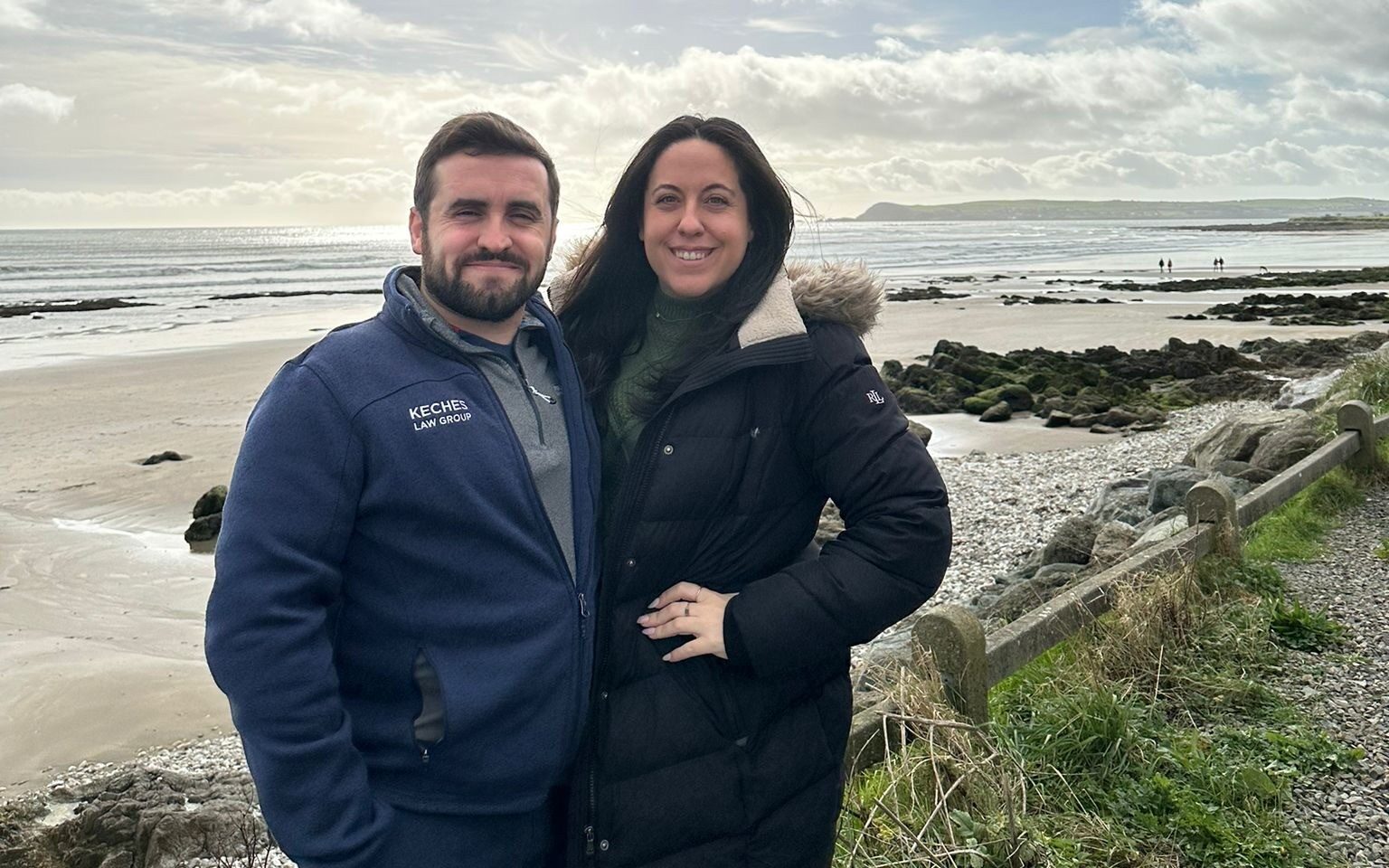
    Sean with his family at the Comeragh Mountains in County Waterford.

    Kiely Wants to Become an American Citizen

    Kiely described how the immigration process is long and ongoing for him, and that he wants to become an American citizen one day. 

    “Right now I’m in the process of hopefully getting my green card,” he says. “After you get your green card, you can wait around 3 to 5 years to become a citizen.” 

    He says it’s ironic how he can get up in front of a court and represent someone, but he can’t vote. But he says he does want to become an American citizen one day and he plans on staying in America. 

    “It just takes time,” he says.  

    He says while he misses his family, and knows living in America means he misses out on some things that happen in Ireland, he loves his day to day life in the USA. He has a great affinity for American culture and his American friends, has built an incredible career, and plans on staying for years to come. 

    “Ireland is a great country…I can go and get respite whenever I need to,” he says, “but I’m in the US for the long term.”