Move Highlights How Lawsuits Improve Safety Measures in America
The U.S. Environmental Protection Agency (EPA) announced that the last remaining form of asbestos, specifically chrysotile asbestos, used in America has been prohibited, in a move that marks an important milestone for chemical safety.
“EPA has been working expeditiously to put the nation’s chemical safety program back on track and finally realize the protections of the 2016 law. This action is just the beginning as we work to protect all American families, workers, and communities from toxic chemicals,” said EPA Administrator Michael S. Regan.
How is Chrysotile Asbestos Used?
Chrysotile asbestos is found in automotive products like sheet gaskets and brake blocks. The use of the substance has been decreasing in the United States ever since the EPA first sought to ban some uses more than 50 years ago.
In addition, chrysotile asbestos is used in sodium hydroxide and chlorine, which serves to disinfect drinking water and wastewater. However, two-thirds of the chlorine produced in the United States is produced without asbestos, so transitioning away from the use of the chemical shouldn’t be difficult.
Asbestos exposure is known to cause lung cancer, mesothelioma, ovarian cancer and laryngeal cancer. Every year more than 40,000 deaths are linked to asbestos in the United States.
While thousands of people are affected by asbestos every year, lawsuits on behalf of the victims have brought justice and accountability. When there is a public danger that hasn’t been eliminated, taking legal action is sometimes the best option available.
“Personal injury lawsuits and specifically the civil justice system really have not raised the cost of anything for people and in fact, when you look at it, in the long run, they’ve actually protected people,” says Andrew Abraham, a Partner at Keches Law. “So there’s seatbelts in cars because of personal injury lawsuits. There are all sorts of improvements in your house, in your clothing, in your food, in your medications that you take, in the cars that you drive in, the lawnmowers that you use, the snowblowers that you use have been made better and safer by personal injury lawsuits.”
Abraham says that while there are always people and companies that are looking to take advantage of people, personal injury lawsuits offer a way to defend yourself.
“It’s, unfortunately, a well-hidden fact that personal injury lawsuits, generally speaking, make us safer. Holding people that choose to violate safety rules accountable is very, very important to protect our society and protect our families,” he says.
The skilled Workers’ Compensation and Personal Injury Attorneys at Keches Law are ready to defend you if you have been injured because of someone else’s negligence.
Contact us today so we can help you go through every step of the process to getting you justice and holding those who wronged you accountable.
Attorney Sean Kiely had a happy childhood growing up in Waterford, on the southern coast of Ireland. But he says where he is from, emigration to America or another country, is an option people always consider. After he finished college, he decided it was the right next step for him.
Seven years later, he says he wants to stay here forever.
How do Ireland and America Compare?
“It’s very similar to America,” Kiely says about growing up in Ireland.
He says the Irish-American population in cities on the east coast of the United States and specifically in Boston, have done a good job of bringing a lot of the traditions to their new country.
“A sense of family, sense of loyalty to your friends, strong work ethic and trying to do your best for your children, a lot of those have been imported,” he says.
“I’ve talked to relatives who emigrated in the 50s or 60s, they grew up in a very different Ireland. It was a lot poorer, there wasn’t even the right to a free middle school or high school education,” he says. “When I moved to America, the culture shock wasn’t as big as generations prior to me.”
Sean Kiely says when he was growing up, St. Patrick’s Day in Ireland was a family holiday that involved a lot of relaxed celebrating, perhaps going to a Catholic Mass, but mostly it was about spending time together and celebrating Irish heritage.
He says it’s different in America because the people involved have a different history to celebrate.
“Those Irish from decades or centuries ago that came here, built America,” he says. “It was on their backs that a lot of the great cities were built.”
“In America, St. Patrick’s Day is a great day that gives Irish-Americans the opportunity to be proud of their identity and their background. It is evident that Irish-Americans take great pride in their Irish heritage. Alternatively, in Ireland, because there isn’t as much reason for people to celebrate their Irishness, it is hard for those people to understand the Irish-American celebration of St. Patrick’s Day. The Irish culture in America is strong, and it doesn’t discriminate between generations. We are all proud to be Irish.”
Why Did Kiely Come to America?
Growing up, Kiely says the American culture was all around him. The same TV shows that we watch here were on TV there. The movies we watched were shown there. The same gadgets we played with were available there. So he always saw the move as a possibility.
“There was a lot of influence of American culture in Ireland at the time,” he says. “America as a country, I was always fascinated by it.”
Standards of living in Ireland were pretty similar to the middle class lifestyle in America, so he said it wasn’t a move of necessity as much as something he just felt was the right decision for him.
Kiely’s New York Years
Kiely first moved to New York City, where he worked for five years for a law firm where he practiced family law. However, there were drawbacks.
Kiely says family law can be difficult because there really aren’t happy outcomes when families are splitting apart, and kids are often caught in the middle. In addition, cases are tried before a judge, instead of a jury, which he said isn’t what he preferred. Over time he decided to change his primary focus to personal injury.
“This type of law allowed me to do what I wanted to do, what I was trained to do as a barrister in Ireland, which was try cases before a jury and still get to represent everyday normal people,” he says.
Joining Andy Abraham’s Team at Keches Law
After years in New York, Kiely tried a case representing a personal injury victim, and discovered that was the direction he wanted his career to take.
When the opportunity to come to Keches Law was presented to Kiely, he took it. Two years ago, Kiely moved to Massachusetts to join Keches Law Partner Andy Abraham’s team that mostly handles brain injury cases.
Kiely says he loves that in his job he gets to fight for people who have had the rug pulled out from under them and need help to get back on their feet, in particular, he says he sees eye to eye with immigrant clients.
“They’re at more of a disadvantage because they don’t oftentimes speak English fluently, or they don’t have qualifications, or they can’t retrain to a different area,” he says. “It’s my job to fight for them with the same intensity that I would like someone to fight for me if my ability to work was taken from me or my ability to provide for myself or a family was taken away.”
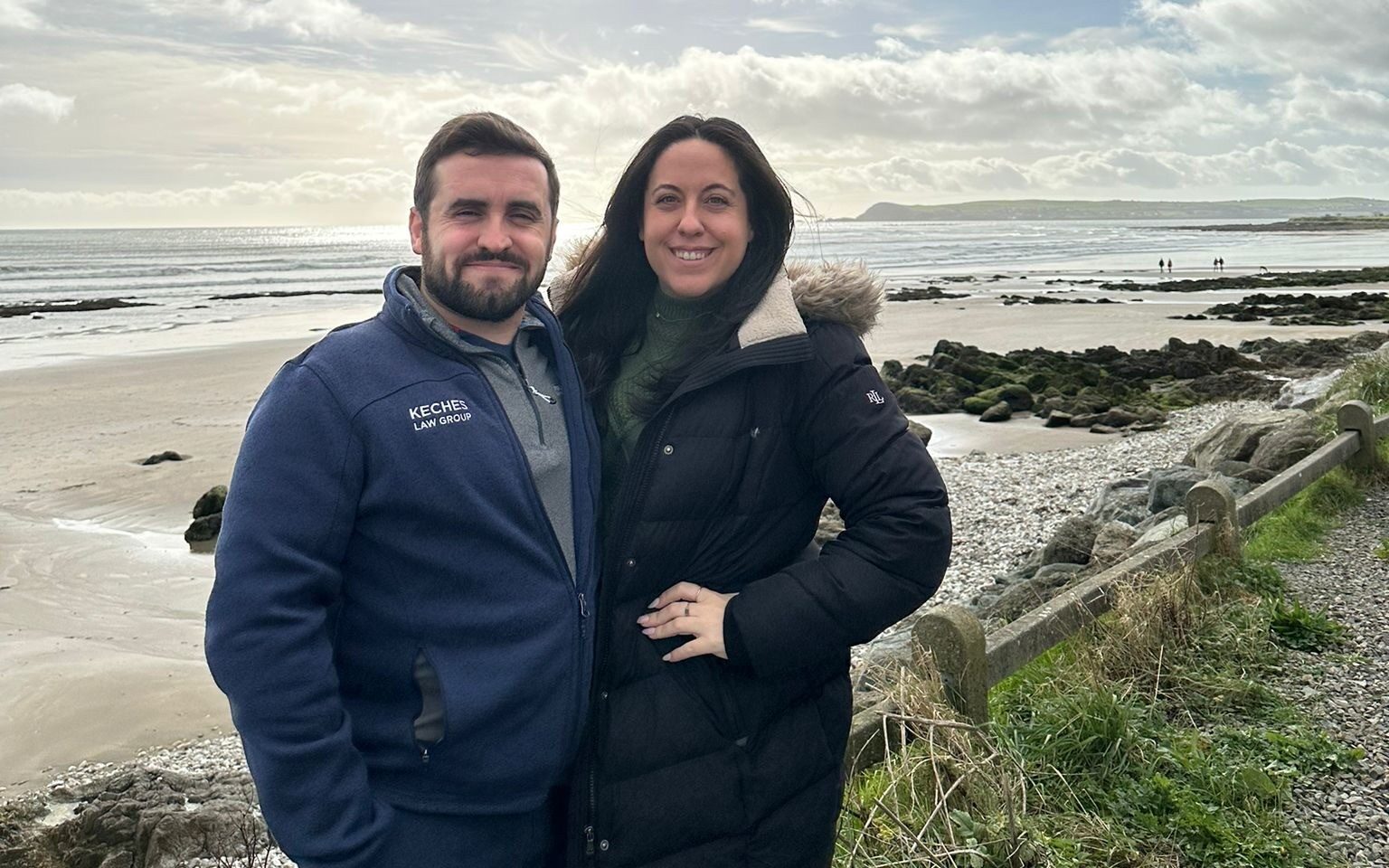
Sean with his family at the Comeragh Mountains in County Waterford.
Kiely Wants to Become an American Citizen
Kiely described how the immigration process is long and ongoing for him, and that he wants to become an American citizen one day.
“Right now I’m in the process of hopefully getting my green card,” he says. “After you get your green card, you can wait around 3 to 5 years to become a citizen.”
He says it’s ironic how he can get up in front of a court and represent someone, but he can’t vote. But he says he does want to become an American citizen one day and he plans on staying in America.
“It just takes time,” he says.
He says while he misses his family, and knows living in America means he misses out on some things that happen in Ireland, he loves his day to day life in the USA. He has a great affinity for American culture and his American friends, has built an incredible career, and plans on staying for years to come.
“Ireland is a great country…I can go and get respite whenever I need to,” he says, “but I’m in the US for the long term.”
Over the course of a case, our attorneys spend a lot of time with their clients. There are long days, late nights, shared meals, and bonds formed. When the case ends, our lawyers and staff share in the joy of a win or offer a place to turn when things don’t work out. We know our clients, and know what the case means to them, their family and their future.
“Even after their case has settled, I always tell my clients, this doesn’t terminate our relationship,” says Keches Law Workers’ Compensation Senior Attorney Lauren Van Iderstine. “I always make a joke that ‘you’re stuck with me for life’.”
What are Google Reviews?
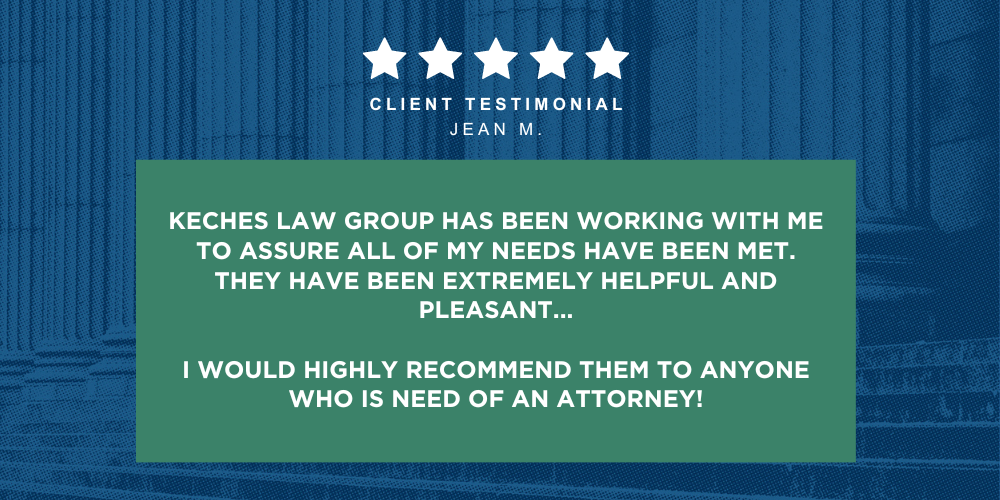
When people search for a business on Google or look up directions on Google Maps, one of the first things they will see are the business’s Google reviews. These are reviews left by customers of the business so that other people can make an informed decision about whether to go to the restaurant, buy the product, or in Keches Law’s instance, hire an attorney.
According to Forbes, more than 60% of customers check Google reviews online before they visit a business.
Why Do Google Reviews Matter When Choosing an Attorney?
Van Iderstine says she always encourages clients to leave reviews online because it helps show other people looking for a lawyer the whole experience.
“It’s giving their word and what they have to say value,” she says. “It’s a hard journey, so at the end of that, asking for them to share their experience…really means a lot to them.”
Van Iderstine personally reaches out to clients to ask for reviews whenever she can and consistently receives high marks, but she says if a review isn’t positive, that is useful as well.
Transparency is one of the hallmarks of Google Reviews. Customers can see what former customers thought, and Van Iderstine says that if someone had a bad experience, it just shows her and her team an area to improve on.
Keches Law Senior Attorney Kelli Silva says Google Reviews provide insights to potential clients about whether an attorney might be the right fit for them personally.
“To me choosing the right attorney is as important as choosing the right doctor, so Google Reviews give clients some insight into who we are as people and attorneys and if we would make a good team,” she says.
When a person is trying to choose their attorney, to guide them through what will be a very difficult time in their life, Van Iderstine says Google Reviews offer them the opportunity to take charge.
“People, when they’re injured, feel like they no longer have control of their lives,” she says. “I want people to have control of their lives. They’re looking on Google because they want to have that little bit of control left. They want to be able to choose their own lawyer.”
Lauren Van Iderstine wanted to be an attorney since she was a kid, she says her dad likes to say she would argue about what color the sky is. As she grew, she began to pursue becoming a judge but learned that it wasn’t right for her, because it didn’t have the same connection to the client.
“I realized I wanted to be actually practicing law, and be able to fight for my clients individually,” she says.
When her father was injured at work and she was connected with Keches Law, she says she immediately felt at home. Keches Law attorneys worked with her throughout the process, and she says what really resonated was that they were helping her but teaching her at the same time.
“It just immediately felt like where I wanted to be. It felt like home,”she says.
Throughout her busy days with her busy case load, she says she has trouble turning clients down because she knows what it feels like.
“I see my dad in a lot of clients. I feel like that has given me a better understanding and perhaps more patience with people,” she says. “It helped me in a lot of ways appreciate what people go through and what this whole process does to them.”
Client Feedback Helps Us Keep Getting Better
When Keches Law receives a review, someone on our team reads and responds to each one along with documenting any learnings to ensure we are continuously improving our client service.
“Reviews help our attorneys to improve their practice, as well as helping people who are looking for legal help,” Client Experience Manager Jill Solimini says. “Reviews help potential clients see that they are not alone, and that other people have been in a similar situation as them. They can be reassured while choosing an attorney that these clients found the attorneys at Keches Law group to be very attentive, compassionate, and dedicated during what can be a very trying time in their lives.”
In short, in an industry where trust is key, Google Reviews show our potential clients that we are trustworthy.
Customer engagement is one of the ways that Keches Law has built a community with our clients. We want our clients to feel heard, and hopefully feel loyal so that if they know someone else that needs an attorney they’ll think of us.
Van Iderstine says it is important for the firm to gain trust, but reviews also help her stand out as individual.
“We want them to know the lawyers and know that the lawyers are good at what they do,” she says. “Not just that Keches Law Group is good at what they do.”
Silva says having a good reputation is crucial for our business’s success and reviews are a window into how pleased our clients were with their experience.
“Reviews showcase the incredible people we have working at the firm tirelessly day in and day out for our clients,” she says.
According to Solimini, Keches Law has had an excellent response from our clients through online reviews.
“We currently have over 1000+ reviews with an average 4.8 rating on just Google alone, with many of our attorneys receiving Avvo Client’s Choice Awards, as well as Martindale-Hubbell’s Gold and Silver Client Champion Awards,” she says.
Van Iderstine says the reviews are helpful for clients who are in the middle of a tough decision at an even tougher time.
“They want to look online and do the research for themselves and know that they’re choosing the person who is right for them,” Van Iderstine says. “It’s ultimately their choice, and I want it to be an easy choice for them.”
Let Keches Law Group Help You
If you are in need of a personal injury lawyer or workers’ compensation attorney, reach out to Keches Law Group. We have the reviews to support the claim that we help people get through traumatic moments in their lives every day.
Contact us today and let us help you in any way we can.
$100 Per Catch Contributed Throughout Patriots Regular Season
Foxboro, Massachusetts (January 10, 2024) — Keches Law Group announced Wednesday that it contributed over $35,000 to it’s scholarship fund during the New England Patriots football season as part of the “Catches for College” initiative in partnership with 98.5 The Sports Hub.
The “Catches for College,” sponsorship was a promotion with 98.5 The Sports Hub radio network. Keches donated $100 to its scholarship fund for every reception made by the team throughout the regular season – a total of $35,100 for 351 completions.
“We’re proud to be the official law firm of the New England Patriots and are thrilled to be able to raise such a sizable amount of money to put towards our scholarship fund,” says Keches Law Managing Partner Sean Flaherty.
Keches Law has a long history of community involvement and charitable causes in Massachusetts and beyond. For the past five years, Keches Law has awarded a college scholarship. North Reading resident Molly Harrington was the 2023 recipient.
Since opening in 1986, the Keches Law Group has recovered more than $2 billion for their clients and has supported unions and fights for the rights of people injured on the job throughout the greater Boston area, Rhode Island, New Hampshire, and Connecticut. Other practice areas include social security disability, employment law, class action, medical malpractice, and more. Keches Law Group also prioritizes community involvement and charitable causes through their non-profit organization, Keches Cares. For more information, visit the Keches Law website or follow them on Facebook, Instagram, Twitter, and LinkedIn.
Marcia Raphael Says Her Condition Isn’t ‘Cookie Cutter’
Keches Law Senior Paralegal Marcia Raphael was born with epilepsy and has faced and overcome obstacles her whole life. She became a paralegal after being fired from her job just for having epilepsy. She fought for her rights, fell in love with the work and pursued a career in law. Recently, she took a few minutes to talk about what her life is like with the neurological condition, and what she wishes others knew about epilepsy.
So my name is Marcia Raphael. I am a senior paralegal at Keches Law Group. I’ve been here for four years now and I’m an epileptic.
Mark Burridge
Can you describe what epilepsy is and how it affects you on a day-to-day basis?
Marcia Raphael
So epilepsy, in a nutshell, is an overactivity in the brain that causes reoccurring seizures and how it affects me on a day-to-day basis is that I have to always watch how all of my activities are, like, it affects everything that I do. I have triggers and they cause symptoms, so I have seizures that are tonic-clonic and those are convulsive seizures. I have those about once a month, and then I have the absence seizures, which can happen about 16 times a day, and that’s with medication.
With that, those seizures themselves cause symptoms. So even though you’re seeing the seizure, it can cause fatigue, it can cause confusion, it can cause body aches. It can cause a whole bunch of things that I have to navigate in my daily life. So not only am I navigating my triggers, I’m also navigating the symptoms of the seizures. And then with regard to the triggers, triggers are everywhere in life. I always say that my trigger is life itself. Because everything can be a trigger, I have to keep myself kind of in the middle of everything. Can’t be too, too hot, too cold, too anything. So I always have to moderate myself.
Mark Burridge
What would happen if you didn’t have medication?
Marcia Raphael
I would have uncontrolled seizures, so that would mean that I would just seize without limitation. And unfortunately, that could have detrimental consequences.
Mark Burridge
Can you tell me about the different types of seizures you experience?
Marcia Raphael
So I have tonic-clonic and I have absence seizures. So tonic-clonic are the convulsive seizures where again part of you becomes rigid in some way. So let me take a step back.
Generalized epilepsy means that you have seizures on both sides of your brain, so you become absent in your brain. You’re like, not present. So the tonic-clonic means that you’re not present, but you’re also becoming rigid in some way, and usually a part of you is twitching or convulsing. And usually, it’s just you’re a complete convulsive seizure. But it can be just a partial convulsive on one part of your body.
And then there’s absence seizures where it can be, can last anywhere from like 10 seconds to 60 seconds. And those are harder to tell and a lot of times I have to accommodate those kind of things because when I have conversations, people don’t realize I’m having them. And I have to fill in the gaps of what they’re talking about or ask them to repeat what they’re saying and explain that I’m not trying to ignore them.
I’m literally just, I missed something that they were saying because to me it’s like a blink. It wasn’t even a couple of seconds. It was me blinking. Sometimes they even walk away and I don’t even realize, it’s like magic. The person just disappeared to me. So it really is a polarizing kind of experience because to them, I’m just standing there, not responding, and it can be kind of like I’m ignoring them, but to me it was just a blink.
Mark Burridge
Does epilepsy affect you even while you’re relaxing.
Marcia Raphael
It does, so, as I said, I have to moderate myself. I can never be too much of anything. So if I’m too excited or too relaxed, it does affect me. So even when I’m relaxing watching TV, reading or something. I tend to try and still do other things to occupy myself in some way, because otherwise I have increased absence seizures.
So there literally is no way for me to be too much of anything. I always have to live in the middle. So again, if I’m too cold, too hot, too stressed, too anything, I have to really moderate myself and live in the middle of everything.
Mark Burridge
Do you feel like people understand what epilepsy is?
Marcia Raphael
No, I do not think that people understand what epilepsy is. I think that people have an idea from maybe TV or hearing about epilepsy. They specifically think that epilepsy simply is like tonic-clonic seizures. The convulsive seizures, that’s their main idea of what seizures are and then they might think of like the basic triggers of like the flashing lights. Maybe noise causing some kind of epileptic episode, but for the most part, that’s all that they really understand. There’s so many different types of epilepsy that the ones that are absent or partials, they forget that those exist. And those are just as important as the convulsive seizures.
And then the actual seizure, like I said, is not the only part of being an epileptic. It is the symptoms that are involved after the aftercare because there’s a lot of times that the symptoms last days or weeks and we have to deal with the aftermath of that for so long that it, it matters.
Mark Burridge
How important is it to educate the people around you about epilepsy?
Marcia Raphael
Oh, it’s imperative. I find it imperative for myself anyway, because of my safety. By educating people, it’s creating a conversation that I’m educating them on my epilepsy and it’s important because epilepsy is not a cookie cutter disorder. Every epileptic has their own set of triggers. They all have their own set of needs. So if they try to give care to me, that might be for someone else with epilepsy, it might be detrimental to me again. So it’s very important for me to educate the people that are around me on a daily basis on what I actually need and it’s imperative that we have that kind of conversation. So and also it’s imperative for their safety as well, because if they try and do something that might be like restraining me in some way, I could hurt them as well and I don’t want to do that. So the conversation is needed so that both parties are safe.
So in my past when I was working, I experienced some discrimination. Specifically, I was let go because I was an epileptic, and I realized that, that was a violation of my rights.
No one told me explicitly that it was, but I had a feeling that it was, and I decided to do my own research, and upon doing my research, I contacted the Massachusetts Commission Against Discrimination and I fought it all the way through, and that’s what made me learn to love the law because I realized that there’s people out there that don’t understand that they have rights and I wanted to make sure that other people’s rights weren’t violated in some way. So I just learned to love the law because of that.
Mark Burridge
How has your experience been at Keches Law?
Marcia Raphael
My experience at Keches Law Group has been refreshing, to say the least, and I don’t say that lightly.
I have worked at different places and I really do feel like, not only with management, I’m talking about on a pure level, people have been very open with dealing with me and my epilepsy and wanting to communicate and learn. And then on the management side with dealing with my direct attorney, with dealing with HR, again, there’s been an open communication about wanting to learn, wanting to educate people, wanting to make sure that I have whatever accommodations that I need.
It’s been very refreshing and very inclusive because I really believe that Keches Law Group is looking to be inclusive.
When you’re outside of work, what do you like to do?
Marcia Raphael
So of course I love being with my family, but you know, I’m a nerd. I like Star Trek. I love the MCU. I love DC Comics and all that kind of stuff. So I watch a lot of those things. I read. I love Harry Potter, so I’m a Potterhead and that’s just of what I do on top of cooking and things like that for my family and friends, because that’s what I love to do.
Again, I go back to if I you know, watch TV specifically the MCU, because I love Marvel Comics. I love watching like Doctor Strange and Spiderman. I couldn’t watch the last couple of movies because specifically Doctor Strange is in them and I can’t watch him because he does a lot of the magic and there’s a lot of flashing lights in them and I just can’t view movies that have that kind of stuff in them, so unfortunately I’ve missed several of the last Marvel comic movies. But when I do watch TV again, I can’t be too relaxed. So a lot of the times I crochet while I watch TV, keep my hands busy, my mind busy while I’m watching TV so but that’s what I like to do outside of, you know, work.
Mark Burridge
What is one thing you’d like people to take away about epilepsy?
Marcia Raphael
One thing that I would like people to take away about epilepsy is that it’s not cookie cutter. It is so important to have a conversation with the epileptic that you’re dealing with. Without doing that, it is dangerous, first of all, but it’s also disrespectful and you always want to respect the person that has the disability. So, it’s not cookie cutter. Everyone is different. Have a conversation. I implore everyone to do that.
No two days are the same for our People and Culture team! This team of five handles hiring, onboarding, training and development, talent management and benefits for our entire workforce. In addition to their specific job functions, they’re also always ready to listen or help.
Mike Danubio
Mike Danubio joined Keches Law Group in September 2023 to lead our human resources department. The impact on our company culture was immediate. One specific example was the rebranding of his department as the “People and Culture” team to better clarify their purpose.
“We don’t typically talk about ‘the humans’ on our teams or at our company, we talk about the people,” he says. “Our function has traditionally played a service role within an organization, and while that still holds true, I like to think of my role and our function as having the ability to solve problems and align people strategies with business goals.”
Solving problems isn’t always one-size-fits-all either. Danubio says he doesn’t think anyone in the department has a ‘typical day’.
“I may have back-to-back meetings and plans to tackle a particular project,” he says. “Then an employee issue may arise that needs immediate attention.”
Danubio isn’t the only one whose job description varies from day to day. Human Resources Generalist Cathy Shibley says her title is an appropriate one because she fills so many roles every day. You might find her onboarding new hires, helping with payroll, or answering questions about everything from benefits to unemployment.
“I enjoy my role at Keches Law because I care about people, and I want to be a supportive resource for everyone,” she says. “If you have a question, a concern, or a problem, I want to be the person that helps you with a solution. I want to be the person that helps to make your day a little bit easier.”
Lauren Harrington
When it comes to bringing in new employees and then helping them feel a part of the Keches team, Talent Acquisition Specialist Lauren Harrington is the first point of contact. She works with managers to source, interview and hire new team members.
Harrington sometimes has days filled with virtual interviews, and others where she takes a breather. Throughout her career, Harrington has been able to use the skills she’s learned to help businesses in different industries, not something that anyone can do.
“HR is a wonderfully transferrable field and has allowed me to experience so many different companies,” she says.
Just because people are on board, it doesn’t mean they should stop growing as people and employees. The People and Culture department directly tackles this through Training and Development Manager Dan Sheedy.
Sheedy worked in the tech industry for 10 years but decided he wanted a career change that involved helping the people around him.
“After I completed my master’s degree in organizational leadership from Southern New Hampshire University, I began to look for a new and challenging career,” he says. “I found one here at Keches Law.”
He is currently helping with the buildup of an internal website for our team members to make it easier to find information on any Keches-related topic they might need.
“It should be a one-stop shop for information,” he says.
The department also has an intern, Lily Marra, who has been working at Keches since June 2023. She spends her days helping with recruitment, hiring, onboarding, benefits and leave as well as any needed administrative tasks.
“Throughout my undergraduate and graduate career, I have enjoyed learning about HR and how I can make a difference within organizations,” she says.
The Keches Law Group motto is “Put Us To Work For You,” and our People and Culture Department embodies that motto every single day. When the people of Keches Law need help, they know where to turn.
Come Work with Us
Want to work somewhere you can make a difference? Click here to explore our open roles!
Raising a family is one of the most difficult but rewarding journeys a person can embark on, and we’re proud to have so many hardworking parents making up our team here at Keches Law Group.
We’re lucky to live in an era when family time holds immense importance. In fact, in a recent Pew Research poll, 73% of American adults surveyed say spending time with their family is one of the most important things in their life.
As a father myself, I can say for certain the most important thing in the world to me is my family. The battle between focusing on the career I am dedicated to and raising children I want to spend all my time with is eternal. Finding the right balance between the two is so gratifying. Having a supportive employer has been key to helping me maintain my sense of individuality while allowing me to think of my children and family every day.
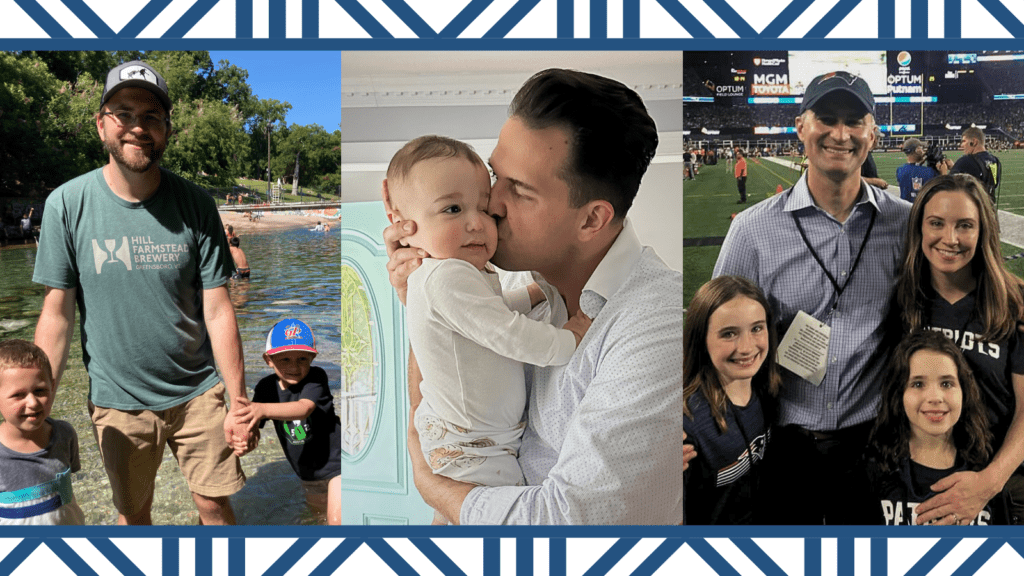
Read on as we explore the transformative journey of fatherhood and hear directly from some of the other Keches dads about the importance of a supportive workplace environment.
BEING A WORKING PARENT IS NOT EASY, BUT IT’S WORTH IT
Keches dads agree that being a father is a very important part of their life, but that doesn’t mean it always comes easy.
“When [I was] younger, there were so many challenges,” says Senior Attorney Joe Ferreira. “Work/life balance, too many boundaries, not enough boundaries, setting aside money for college. Everything is fluid and every experience is different. Do your best each day and it will all work out!”
He said he was surprised by how seamless it was to transition his lifestyle, but that there were still obstacles.
“Balancing overnight duties with my wife was a challenge,” he says. “Balancing work, time with him, and time with family and friends. It has all been worth every minute though.”
Being a dad means “the world” to Falvey, and he says it’s even changed how he approaches work for the better. “Having a child helped me cut a lot of wasted time and action out of my day-to-day, and in many ways has made me a better professional,” he says.
PARENTHOOD MEANS SHIFTING PRIORITIES
Keches dads agreed that work is an important part of life, but becoming a father forever changed their priorities.
“Our world revolves around them, their safety, wellbeing and development,” Chief Operating Officer Tim Blacquier says.
“While keeping a social life intact is still hugely important, certain aspects of social life became less important,” Falvey says.
When it comes to balancing life as a working parent, Keches fathers offered different takes on how to keep the ship afloat.
“Listen and learn from them,” Ferreira says. “As a parent, you may think you know everything, based on your experiences. Then your children come with new insight and ideas.”
Blacquier stressed that balance is key, going on to say that “you can’t be everywhere at once and you’ll have to make sacrifices to create that balance. Sometimes it does get out of whack and you have to make adjustments. Setting clear expectations with both your family and other commitments up front will always help.”
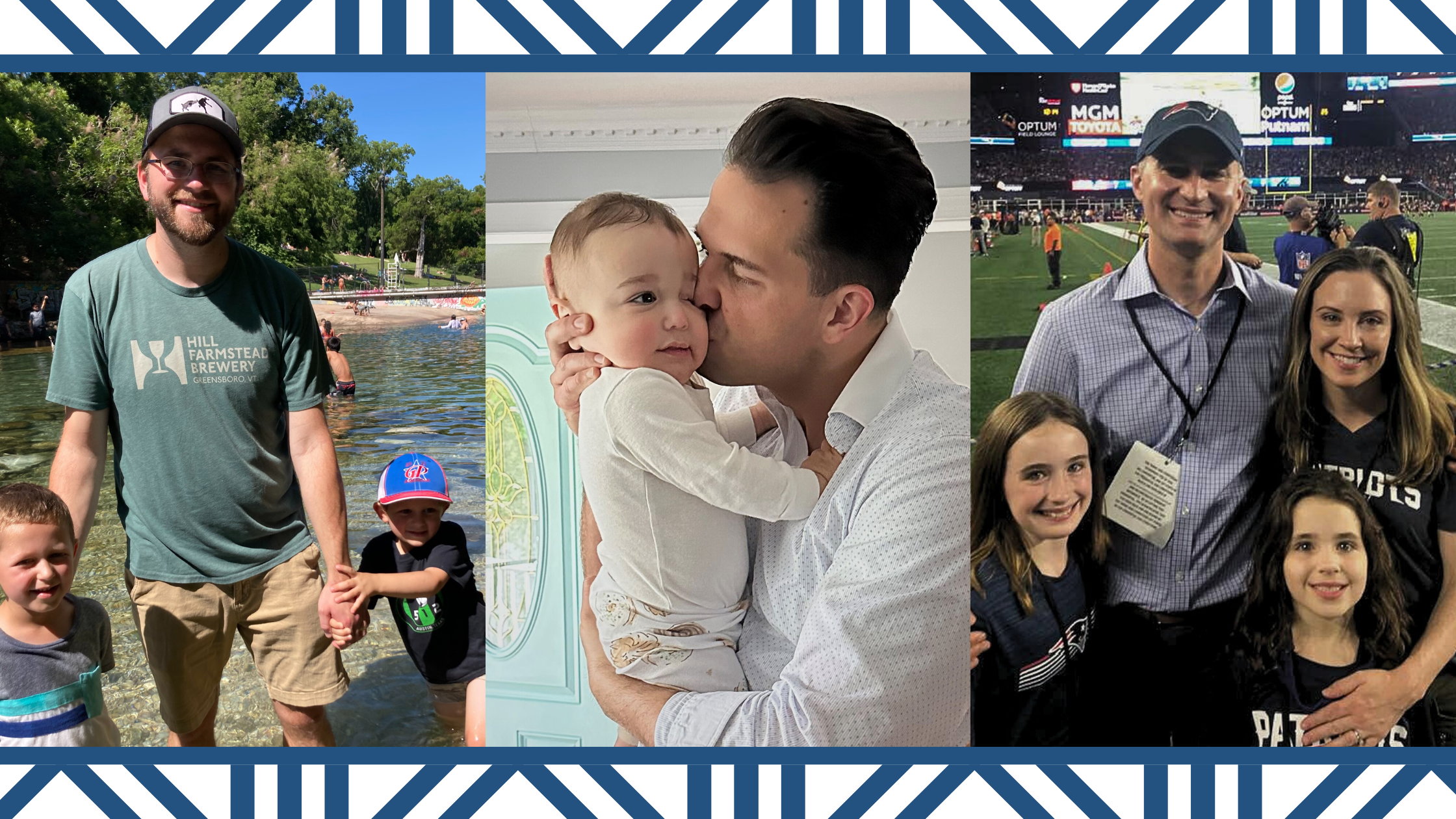
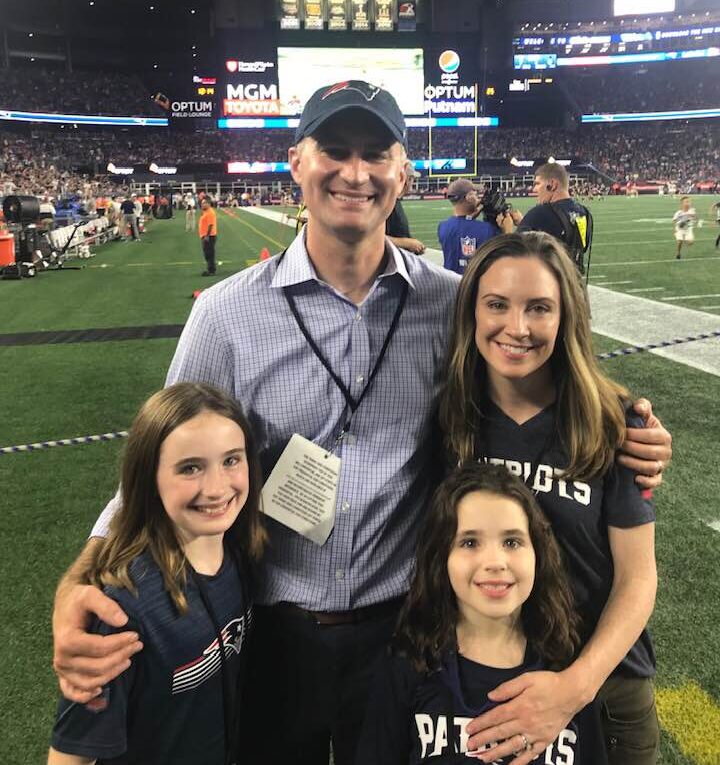
Tim Blacquier with his wife and two daughters, Eliza, 11, and Charlotte 14.
Falvey says although his son is only 10 months old, he has already felt a big shift.
“Fully embrace each moment,” he says. “One minute they need you for everything and the next they are on the move.”
Keches Managing Partner Sean Flaherty prioritizes time spent with his children, taking part in their lives amid his hectic schedule.
“Being a dad will always be my greatest achievement in life. I coach my children in lacrosse and football and I love being there to support their aspirations,” he said.
KECHES STANDS BEHIND WORKING PARENTS
Keches dads all said parenting changed their lives and their priorities and having their employer behind them as a working parent is vitally important.
“I think the continued reinforcing by leaders that primary caretakers need additional flexibility. That way it becomes culturally acceptable by employers, peers and families. Family often gets mentioned as the most important thing in life. But the reality and catch-22 is that we need our careers to provide financial support for our families,” Blacquier said. “Like many things in life, it’s all about balance. Balance is easier to achieve with the right support structures in place.”
Flaherty said it is important that clients understand that the people who make up Keches, whether attorneys, paralegals, or anyone else, understand what they are going through, and want to be there for them.
“I want our clients to know that we’re more than a law firm. We are fathers, mothers, sons, and daughters – and we understand hardship and are able to give genuine advice. Many of our attorneys and team members come from a blue-collar family background, and we know what it’s like to feel unsure about reaching out for help,” he said.
Being a parent means things come up that don’t always match up ideally with a work schedule. Kids get sick, events happen during work hours, sometimes childcare falls through. Keches dads said they think their company is very supportive.
“Keches is the best at imploring, and downright ordering employees to take vacations and care for their family before work commitments,” says Ferreira.
Joe Ferreira sits with his three daughters, Katelyn 31, Julie 28, and Danielle 24.
Blacquier says he thinks the legal industry as a whole lags behind other industries in regards to progressive policies. But he thinks Keches is generally ahead of its peers.
“There have also been amazing strides in state legislation that has helped spearhead change and support with things like Paid Family Medical Leave,” he says. “I remember when I was a new dad back in 2008, not working in the legal industry, I think I had a week off and was expected back in the office on day 8. There has been a lot of progress since then, across all industries.”
Keches Law Group is lucky to have such dedicated fathers working at the firm.
“No matter how busy you are, our family must always be number one,” Ferreira said. “Do not miss any opportunities to be with your children, always.”
Interested in working at a close-knit company where you can make a difference? Check out our Careers page to view our open roles!
Sue Mulligan isn’t afraid of a challenge. In fact, she embraces them.
Sue first joined Keches Law Group on February 5, 1995 as our very first paralegal, but her appetite to take on new responsibilities and learn new skills has allowed her to carve out a unique career path. She wasn’t only our very first paralegal; she also served as the firm’s first information technology specialist, a department administrator, and now operations manager. If Keches needs something, Sue is always ready to give it a shot.
“I’ll do it,” Sue says enthusiastically. “I like working at Keches. It’s a good fit. There’s been a lot of variety and the challenges have been stimulating.”
But Sue’s career journey started before she joined the firm, and it certainly wasn’t always easy. Read on to hear directly from Sue about her experience charting her own course and how its led to a career she’s loved.
STARTING OUT IN THE WORLD
“I graduated from Keene State University with a degree in environmental science,” Sue says.
When she left school, Sue stayed on a friend’s couch in Boston while working at Shreve, Crump & Low, a jewelry store in the Chestnut Hill Mall. On her first day, she immediately felt out of place.
“When I walked in, all the men were wearing suits, all the women were dressed up,” Sue says. “And I’m an outdoorsy girl. I thought, ‘I don’t belong here.”
She felt more at home when her future husband Jim, who worked in the repair shop at the back of the building, walked in, wearing plain clothes and looking at ease.
Sue stayed on at Shreve, Crump & Low for 18 months as a cashier and then salesperson. She and Jim married and while they lived in an apartment in Walpole their daughter Jessica, now 38, was born. While she was pregnant with her son Matthew, now 35, they moved into a two-bedroom condo in Norton. The family moved into a different house in Norton 25 years ago and have been there ever since.
Shreve, Crump & Low was a job, but it wasn’t the career Sue wanted, and she started looking for work closer to her environmental science degree. She found one in the science field as a lab technician at Shuster Labs in Quincy.
TESTING A CAREER AT SHUSTER LABS
The lab tested and developed all sorts of different products – everything from mops to peanut butter. For the 14 years Sue worked there, she would help evaluate the items for safety as well as things like color and consistency.
For example, she says she would compare a store brand English muffin to a national brand. She would test it for everything from texture, size and even just the look of the “nooks and crannies”.
“It was fascinating, there was always something new to learn,” she says.
During Sue’s tenure at Shuster, she rose to the role of Account Manager. But never felt comfortable at the lab. She says it was difficult to progress at the lab and she needed to fight for pay raises and promotions.
“I felt like a square peg in a round hole,” she says. “I battled my way up, but it was frustrating.”
She decided to make a big move. Sue went back to school and attended a paralegal certificate program at Northeastern University. The school had a job placement program, and she patiently waited for a good opportunity that wasn’t in Boston. Eventually Keches Law Group, which was in Taunton at the time, popped up.
“It was just a good fit,” she says of Keches. “I was the first paralegal they ever hired.”
FINDING A HOME AT KECHES
For the next 10 years, Sue was a paralegal at Keches Law, working for six or seven lawyers at a time.
She says the work came naturally to her, using her analytical and organizational skills. During her time as a paralegal, Sue says she wrote several briefs for attorneys and even wrote a closing argument once.
Although she was happy with the level of responsibility she was receiving as a paralegal, different opportunities at the firm pulled Sue in new directions.
Keches needed someone to step up and volunteer to learn how to manage technical support for the firm. Always willing to try new things, Sue agreed to take on the role. She said she enjoyed figuring out how everything worked and asked questions to help teach herself.
“I’m a highly organized, structured, analytical person,” she says. “I guess I’d say I’m a self-starter. I like to work both independently and as part of a team.”
While doing paralegal work and tech support, she learned the Tort Department needed someone to manage the support staff and she accepted the opportunity.
“I spent the next two years learning about tort law,” she says. “I asked a million questions about tort law procedures.”
At the same time, Sue was given the role of case management department administrator.
Ultimately, Sue is ready to fill whatever role Keches needs.
With the firm’s growth over the last few years, Sue has recently taken on a more all-encompassing role as the firm’s Operations Manager.
“I do whatever is needed,” she says.
THOUGHTS ON KECHES
Through all the jobs and years, Sue says she has had a great experience working at Keches. In particular, she says when her husband passed away 19 years ago, the firm took a lot of stress and concern off her shoulders.
“They told me to take as much time as I needed, they said I had a job waiting for me when I was ready to come back and my paycheck kept coming,” she says. “It was a huge relief to me.”
As far as where Keches is headed, she thinks Sean Flaherty is doing a great job and Keches is headed in a good direction.
“Sean is very much about the people,” she says. “He has expectations for us but is kind-hearted and thoughtful.”
WHEN THE WORKDAY ENDS
Employees at Keches Law Group in Bridgewater might see Sue if they ever choose to spend their lunch break working out, as she spends most of hers in the company gym.
But that isn’t the only way she’s active; she spends her weekends getting out and about, walking, hiking, and biking. In the winter, she enjoys cross-country skiing and snowshoeing.
“I often meet my son at Gilbert Forest in Foxboro to hike,” she says. “The Blue Hills is another great place to go.”
But aside from all her outdoor adventures (which also include kayaking and camping), Sue enjoys reading, puzzles and knitting.
You may have noticed a pattern here: Sue Mulligan likes to try new things. She likes to learn and figure things out for herself. Whether it is in her coterie of hobbies, or smorgasbord of careers at Keches Law Group, she is up for it all.
COME WORK WITH US
Want to work somewhere you can make a difference? Click here to explore our open roles.
If motherhood is a full-time job, are working moms technically balancing two careers? A 2018 study says yes – and then some!
The study commissioned by Welch’s found that working moms are going way beyond pulling double duty, averaging a whopping 98 hours per week between professional and parental obligations.
The balancing act of being a working parent comes with unique challenges. Read on to hear from some of the mothers of Keches Law Group as they share their perspectives and experiences.
A LOT OF IRONS IN THE FIRE
Being a parent and maintaining a commitment to a full-time career isn’t without its struggles, and learning how to balance the two can feel like your own personal circus.
Legal Assistant Jessica Lema says although some days are harder than others, it comes naturally when doing a job you love and when you have children you love even more.
“Your instincts just kick in when you look at your children’s faces and know that they deserve everything, and you want to be the person they name as their role model,” Lema says.
Senior Legal Assistant Korilyne Furtado says she tries to give 100% to her career when at work, and 100% to her girls when she’s at home.
“While I cannot say I am perfect at it, setting boundaries has helped me become both a more present mother and employee,” Furtado says.
Jessica Lema with her kids, Gracelynne, 4, and John, 1 1/2.
WINNING STRATEGIES FOR WORKING MOMS
Kids need attention at home, and work needs attention at the office. How does someone manage it? Whether learning to change an approach or figure out a system that works personally, the working moms at Keches say they’ve learned how to adjust.
“I keep a very detailed, color-coded calendar,” says Human Resources Generalist Cathy Shibley. “I set lots of reminders and I have lists everywhere!”
Legal Assistant Laura Graham says the most important strategy she uses is preparation.
“Prep is key,” she says. “Laying out clothes the night before, packing school lunches before bed and ‘trying’ to not let the laundry get out of control.”
Senior Attorney Erica Pereira says some sacrifice is needed both at home and at work and coming to terms with that helped her clarify what she wanted.
“Sometimes you can’t give 100% to everything and that is OK,” Pereira says. “It takes a long time to understand yourself enough to realize that there can be a balance that allows you to be successful without sacrificing too much of yourself and what you want.”
Erica Pereira with her daughters, Brooke, 11, and Quinn, 9.
Operations Manager Susan Mulligan says she advises enjoying kids while they are young without too much pressure.
“Do the best you can and don’t beat yourself up if you think you’re not measuring up,” she says. “Don’t stress about trying to get all the chores done and take the time to spend with the kids when they’re very young, they grow up fast!”
SETTING AN EXAMPLE
Senior Legal Assistant Valeri Drummond says she likes the message it sends to her kids to see her going to work.
“Some days, it was definitely a challenge, but I liked them knowing we all have to do our part, to go to school or work,” Drummond says.
“One of the most significant things I can do as a mom is to be a positive role model for my daughter,” she says. “To guide and support her in growing and becoming a young woman who is confident in herself and who knows that she can achieve anything she wants if she works hard and that there are no obstacles that she cannot overcome.”
THERE’S ROOM FOR IMPROVEMENT
Despite cultural shifts that have made workplaces more welcoming to working parents, many moms of Keches agreed there’s still a ways to go when it comes to providing flexibility and consideration.
“Understanding the basis of a healthy and functioning society begins in the home with healthy parents,” Legal Assistant Layne Watson says. “Family is the most important. Without healthy families, the community and culture of that community is greatly impacted in a negative way.”
Furtado agrees, citing support and understanding as essential elements. She says working moms don’t want special treatment, but acknowledging daily struggles of motherhood makes all the difference.
“Moms will find a way to do it all no matter what, it’s what we do! But if encouraged along the way, imagine what else we could do,” Furtado says.
Korilyne Furtado with her children Regan, 3, and Amelia, 1.
THE HARD WORK IS ALWAYS WORTH IT
Although the balance of family and work life is a challenge, working moms at Keches Law Group say the benefit merits the struggle.
“Being a mom has always meant being present for my girls at every opportunity and stage of their lives,” Drummond says. “Supporting their hopes and dreams has been easy and I love who they are.”
“It is very gratifying to see all the hard work you put in guiding your kids and trying to provide a strong foundation finally paying off when your adult children are happy, kind-hearted and responsible,” Mulligan says.
Valeri Drummond with her children, Jessica, 28, and Jensen, 24.
KECHES IS COMMITTED TO SUPPORTING WORKING MOMS
We’re proud to stand behind the hardworking parents who help form the backbone of our team. The empathy and dedication they demonstrate every day ensures our clients feel heard and validated.
“Keches has been exceptionally understanding,” Watson says. “They have exceeded my greatest expectations and I am forever grateful for their understanding and goodwill for others.”
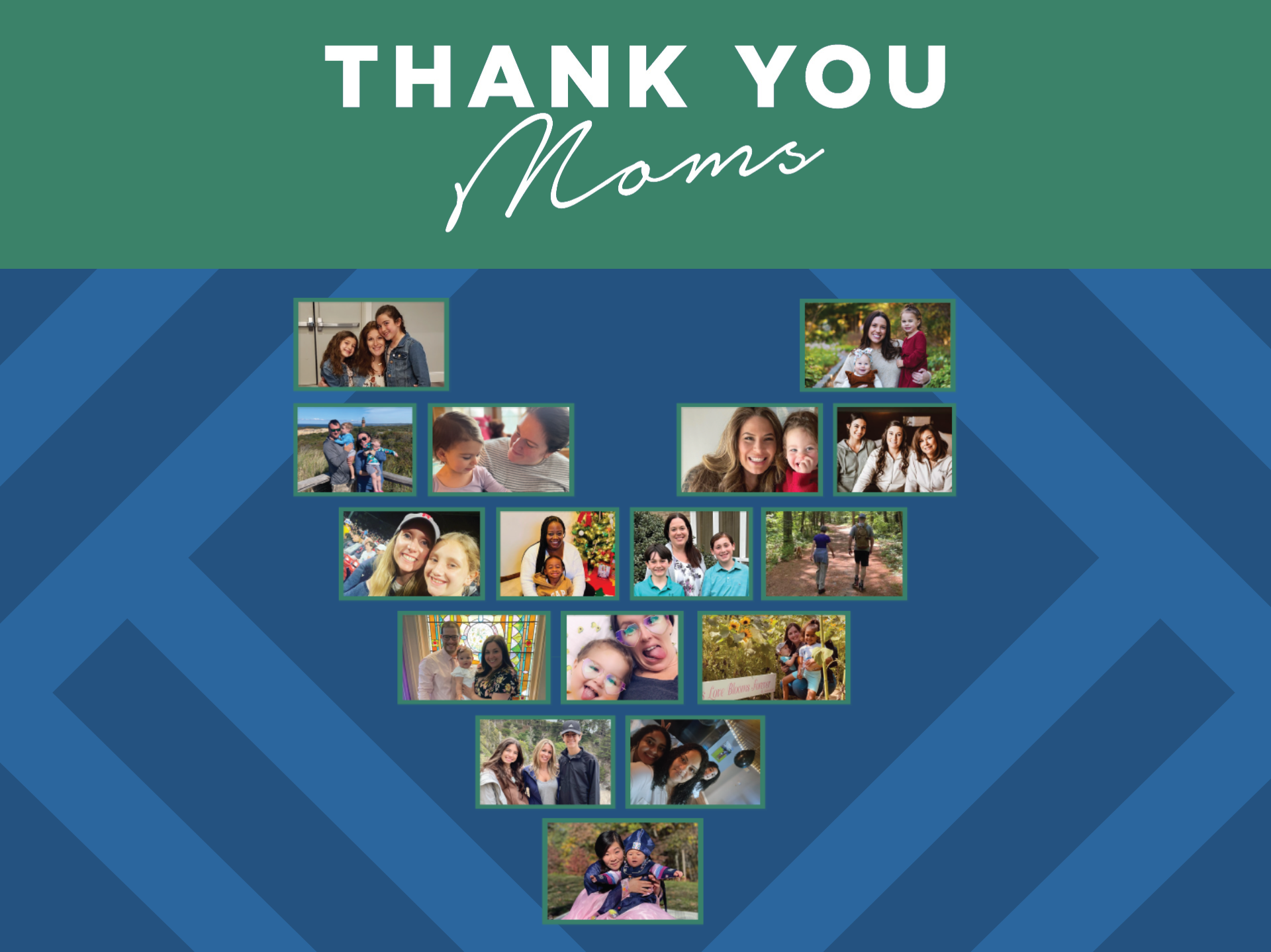
We’re so lucky to have these incredible mothers serving our clients. Be sure to tell the moms and mother figures in your life how much they’re appreciated!