Tag: sean kiely

  • Attorney Sean Kiely: From Ireland to Keches Law

    Attorney Sean Kiely: From Ireland to Keches Law


    Attorney Sean Kiely had a happy childhood growing up in Waterford, on the southern coast of Ireland. But he says where he is from, emigration to America or another country, is an option people always consider. After he finished college, he decided it was the right next step for him. 

    Seven years later, he says he wants to stay here forever. 

    How do Ireland and America Compare?

    “It’s very similar to America,” Kiely says about growing up in Ireland. 

    He says the Irish-American population in cities on the east coast of the United States and specifically in Boston, have done a good job of bringing a lot of the traditions to their new country. 

    “A sense of family, sense of loyalty to your friends, strong work ethic and trying to do your best for your children, a lot of those have been imported,” he says. 

    “I’ve talked to relatives who emigrated in the 50s or 60s, they grew up in a very different Ireland. It was a lot poorer, there wasn’t even the right to a free middle school or high school education,” he says. “When I moved to America, the culture shock wasn’t as big as generations prior to me.”

    Man in barrister wig and robes

    Sean Kiely says when he was growing up, St. Patrick’s Day in Ireland was a family holiday that involved a lot of relaxed celebrating, perhaps going to a Catholic Mass, but mostly it was about spending time together and celebrating Irish heritage.

    He says it’s different in America because the people involved have a different history to celebrate.

    “Those Irish from decades or centuries ago that came here, built America,” he says. “It was on their backs that a lot of the great cities were built.”

    “In America, St. Patrick’s Day is a great day that gives Irish-Americans the opportunity to be proud of their identity and their background. It is evident that Irish-Americans take great pride in their Irish heritage. Alternatively, in Ireland, because there isn’t as much reason for people to celebrate their Irishness, it is hard for those people to understand the Irish-American celebration of St. Patrick’s Day. The Irish culture in America is strong, and it doesn’t discriminate between generations. We are all proud to be Irish.”

    Why Did Kiely Come to America?

    Growing up, Kiely says the American culture was all around him. The same TV shows that we watch here were on TV there. The movies we watched were shown there. The same gadgets we played with were available there. So he always saw the move as a possibility. 

    “There was a lot of influence of American culture in Ireland at the time,” he says. “America as a country, I was always fascinated by it.” 
     
    Standards of living in Ireland were pretty similar to the middle class lifestyle in America, so he said it wasn’t a move of necessity as much as something he just felt was the right decision for him. 

    Kiely’s New York Years 

    Kiely first moved to New York City, where he worked for five years for a law firm where he practiced family law. However, there were drawbacks. 

    Kiely says family law can be difficult because there really aren’t happy outcomes when families are splitting apart, and kids are often caught in the middle. In addition, cases are tried before a judge, instead of a jury, which he said isn’t what he preferred. Over time he decided to change his primary focus to personal injury. 

    “This type of law allowed me to do what I wanted to do, what I was trained to do as a barrister in Ireland, which was try cases before a jury and still get to represent everyday normal people,” he says.  

    Joining Andy Abraham’s Team at Keches Law 

    After years in New York, Kiely tried a case representing a personal injury victim, and discovered that was the direction he wanted his career to take. 

    When the opportunity to come to Keches Law was presented to Kiely, he took it. Two years ago, Kiely moved to Massachusetts to join Keches Law Partner Andy Abraham’s team that mostly handles brain injury cases

    Kiely says he loves that in his job he gets to fight for people who have had the rug pulled out from under them and need help to get back on their feet, in particular, he says he sees eye to eye with immigrant clients.

    >> Attorneys Andrew Abraham, Sean Kiely Settle Head Injury Case for $1.25M

    “They’re at more of a disadvantage because they don’t oftentimes speak English fluently, or they don’t have qualifications, or they can’t retrain to a different area,” he says. “It’s my job to fight for them with the same intensity that I would like someone to fight for me if my ability to work was taken from me or my ability to provide for myself or a family was taken away.” 

    >> 5 Steps to Take After Hitting Your Head

    Sean with his family at the Comeragh Mountains in County Waterford.

    Kiely Wants to Become an American Citizen

    Kiely described how the immigration process is long and ongoing for him, and that he wants to become an American citizen one day. 

    “Right now I’m in the process of hopefully getting my green card,” he says. “After you get your green card, you can wait around 3 to 5 years to become a citizen.” 

    He says it’s ironic how he can get up in front of a court and represent someone, but he can’t vote. But he says he does want to become an American citizen one day and he plans on staying in America. 

    “It just takes time,” he says.  

    He says while he misses his family, and knows living in America means he misses out on some things that happen in Ireland, he loves his day to day life in the USA. He has a great affinity for American culture and his American friends, has built an incredible career, and plans on staying for years to come. 

    “Ireland is a great country…I can go and get respite whenever I need to,” he says, “but I’m in the US for the long term.” 

  • Attorneys Andrew Abraham, Sean Kiely Settle Case for $1.25 Million for Client With Head Injury 

    Attorneys Andrew Abraham, Sean Kiely Settle Case for $1.25 Million for Client With Head Injury 

    Keches Law Attorneys Andrew Abraham and Sean Kiely settled a case for $1.25 million on behalf of their client after a metal section of a door fell on him, causing a traumatic brain injury. 

    The injury occurred in October 2014, when our client was entering a nursing home. When he opened the door, a piece of metal from the magnetic locking system came loose and struck his head. He was taken by ambulance to the emergency room, where he was assessed for the head injury. Advanced neuroimaging found the white matter tracts in his brain were damaged, and he had pituitary dysfunction, a common consequence of brain damage. 

    Holding the Right Parties Accountable 

    After the accident occurred, it was difficult to determine who exactly was at fault. 

    Initially, he sued the general contractor and the electrical contractor for the installation of the locking system, but a third contractor was added to the lawsuit shortly afterward, when expert review determined they were the one who installed the lock.  

    Multiple doors at the nursing home had loose plates, and incorrect hardware was used to install the metal plates, which were also not properly glued in place. Expert review determined that the installation violated good and accepted practices. 

    >> 5 Steps to Take After Hitting Your Head 

    What is a Traumatic Brain Injury? 

    Traumatic brain injuries, or TBIs, are far more common than you might think, and they come with a wide variety of symptoms—and you don’t necessarily have to hit your head to experience one. 

    A  traumatic brain injury  can be caused by a forceful bump, blow, or jolt to the head or body or from an object that pierces the skull and enters the brain (like a bullet). But other common ways to experience one is during a fall or car accident, with the TBI occurring because of the whip of the head.  

    The Science of Mild Brain Injuries

    This case is a good example of how mild TBIs don’t always show up on tests. More advanced testing is sometimes required. For example, our client never lost consciousness or suffered from amnesia and was able to return to work soon after the incident. Because of that, the defense tried to argue that he didn’t suffer a concussion and didn’t have post-concussive syndrome. 

    In addition to the medical reports our client produced, he was also able to bring witnesses including coworkers who described how different he was after the accident. 

    “This case shows the importance of advanced neuroimaging in illustrating a client’s injuries from a mild traumatic brain injury,” Kiely says. “Especially when the client does not have lost wages and has not missed work because of their injuries.” 

    >> I Think I Have a Concussion. What Should I Do? 

    The Settlement

    After a long mediation, the case settled in April 2023, only a few weeks before the trial was scheduled to begin. Our client was awarded $1.25 million. 

    Keches Law Can Help

    Keches Law Group has a dedicated, experienced team of Personal Injury and Workers’ Compensation attorneys who are here to help you whether you suffer from a traumatic brain injury or any other type of injury.  

    Contact us if you need a personal injury lawyer. 

  • Legal Guide to Traumatic Brain Injury Claims

    Legal Guide to Traumatic Brain Injury Claims

    Almost everyone’s been there. You just hit your head and you can tell that something isn’t quite right. Now you need to consider whether you might have suffered a traumatic brain injury. 

    Read on to learn more about TBI and what to do if you’ve just suffered from a head injury. 

    What is a Traumatic Brain Injury? 

    The words “traumatic brain injury” feel pretty big and scary, don’t they? Your mind probably goes to sports injuries, car crashes, and other extreme examples involving a direct blow to the head. 

    But TBIs are far more common than you might think, and they come with a wide variety of symptoms—and you don’t necessarily have to hit your head to experience one. 

    A traumatic brain injury can be caused by a forceful bump, blow, or jolt to the head or body or from an object that pierces the skull and enters the brain (like a bullet). But other common ways to experience one is during a fall or car accident, with the TBI occurring because of the whip of the head. 

    >> I Think I Have a Concussion. What Should I Do?

    Traumatic Brain Injury: By the Numbers 

    Not all head injuries result in a TBI, and not all TBIs are caused by direct impact to the head. The most common TBI is from a fall, representing 40.5% of all TBIs. Being struck is the next highest cause at 15.5%. This group includes sports injuries. Car crashes represent 14.3%, assaults cause 10.7% and 19% are other or unknown causes. 

    TBIs are split into two groups: penetrating TBI, which means the skull is pierced during the injury, and non-penetrating TBI, which is when the skull is hit hard enough from the outside to move the brain inside it. 

    In 2021, there were 190 reported deaths per day from traumatic brain injuries (TBI) and 214,000 TBI-related hospitalizations in 2020. The highest rates of patients and deaths came from people aged 75 or older, and men were two times as likely to die and three times as likely to be hospitalized with a TBI then women. 

    >> 5 Steps to Take After Hitting Your Head

    How Do Traumatic Brain Injuries Affect the Brain? 

    TBI can lead to short-term issues with basic functions like thinking, comprehension, communication and action. More severe TBIs can lead to permanent disability or death. While some TBIs are immediate, others can occur gradually over hours, days or weeks.  

    Brain damage from a TBI can be a “focal injury” – limited to one area of the brain. Or it can be a “diffuse injury” which is more widespread. Brain bleeding and tearing can injure nerve fibers and cause inflammation, metabolic changes and brain swelling. 

    Types of TBIs: 

    • Diffuse Axonal Injuries. A common brain injury affecting the brain’s white matter that usually occurs from brain twisting or sudden stops and is common in car crashes, falls and sports injuries. 
    • Concussion. A mild TBI can take several months to heal or in some cases may never fully heal. A concussion occurs when a blow or jolt makes the brain move quickly forward or backward in the skull. Lots of things can cause a concussion, but they are common in sports injuries, falls and car crashes. 
    • Hematomas. Bleeding in and around the brain. There are several different classifications of hematomas depending on where the bleeding takes place. 
    • Contusions. Brain bruising or swelling caused when small blood vessels bleed into brain tissue. They can appear up to a day after the injury. Contusions typically happen when the head slows down abruptly causing the brain to bounce back and forth such as in a high-speed car crash or shaken baby syndrome. 
    • Skull Fractures. Breaks or cracks in bones that makeup the skull. These are the result of blunt force traumas. 
    • Chronic Traumatic Encephalopathy (CTE). A neurological disorder that affects thinking, comprehension, communication, movement and can lead to problems with impulse control, depression, confusion and irritability. CTE happens after multiple blows to the head and can take years to develop. CTE can also develop in retired athletes with years of blows to the head. It’s most common in boxers, football players, soccer players, rugby players and wrestlers are also at heightened risk. 

    >> Is Your Head Injury Leading to Migraine?

    Depending on how your head was injured you have a few options legally. If it happened because of another person’s negligence, you may have a case for a personal injury lawsuit. If the injury came at work, while performing typical work functions, you may be eligible for workers’ compensation.

    Personal Injury Claims

    TBI caused because of another person’s recklessness or carelessness may qualify for a personal injury lawsuit. Our personal injury attorneys have the expertise necessary to help you with the process. 

    According to Trial Attorney Sean Kiely, mild traumatic brain injuries don’t always show up on tests like MRIs or Cat scans. He said oftentimes, more advanced testing is required, such as diffusion tensor imaging (DTI), which is a test that can measure damage to white matter in the brain. Another important way to show how the injury has affected the victim is to gather information from family members or friends. 

    “You know it’s very real, what they’re going through, when you speak to their family, and friends of theirs. People that knew them prior to the incident and after the incident and how it has affected their personality,” he says. “Mild TBI is oftentimes no less devastating to a person’s life.” 

    Workers’ Compensation Claims

    Workers injured or ill from an incident that occurs within the range of the workplace is eligible for benefits. Workers’ compensation is there so injured workers can obtain wages lost because of a partial or total disability. It can also cover medical and retraining expenses. 

    TBI is one of the most common workplace injuries in the United States, with 1.7 million people suffering from TBIs every year, costing over $75 billion. TBI led to 22% of work-related injury deaths between 2003-2008 and 46% of fatal falls at work. Many sufferers are unable to ever return to work. 

    Between 20-25% of workplace trauma is classified as a traumatic brain injury. Of head injury claims filed in 2018, 60% of them involved TBIs. 

    Kiely says the trial is about more than compensation, it’s about getting his clients the justice they deserve. However, compensation is important to enable the individual to get on with their life the best they can. 

    Keches Law Group Can Help 

    Contact our team of skilled personal injury and workers’ compensation lawyers today if you have suffered from a serious head injury and need to talk to one of our experienced attorneys about a potential case.

  • I Think I Have a Concussion. What Should I Do?

    I Think I Have a Concussion. What Should I Do?

    Imagine you’re in a car accident and you hit your head during the crash, leaving you feeling woozy and sensitive to light and sound. Or maybe you’re playing sports and took a big hit and now you’re drowsy and have trouble balancing. You’ve heard of concussions, but don’t really know what they are or what to do about one. 

    Don’t find yourself in a situation like this without the knowledge you need to respond to a possible concussion properly. Keep reading to find out what concussions are, what to do if you suffer from one and what your legal options are. 

    What is a Concussion? 

    A concussion is a type of traumatic brain injury caused by a blow or jolt to the head that causes the head and brain to move quickly backward and forward. The speed of the movement causes the brain to move in the skull causing chemical changes in the brain and can cause stretching and damaging brain cells. 

    Concussions can make the sufferer fall unconscious, but not always. 

    The most common way to suffer from a concussion is from a fall, but concussions are also common when playing contact sports like football or soccer. They can also occur from car accidents or workplace accidents. 

    Symptoms of a Concussion 

    Concussions symptoms can be subtle, short-term or in some cases delayed. But sometimes symptoms can be just the opposite—lasting for weeks and creating major problems in a person’s life. 

    Watch out for symptoms in yourself after a head injury, but it’s also important to have other people keep an eye out for symptoms you may not notice. 

    • Headache 
    • Ringing in the ears 
    • Nausea and/or vomiting 
    • Fatigue or drowsiness 
    • Blurry vision 
    • Dizziness, confusion or even amnesia regarding the event 
    • Slurred speech 
    • Appearing dazed 
    • Delayed response to questions or forgetfulness 

    Symptoms that occur days later can be a little different. But if things like trouble sleeping, taste or smell changes, light and noise sensitivity, personality changes or concentration or memory issues start cropping up, it may also be a sign of a concussion. 

    Keches Law Trial Attorney Sean Kiely says most people with a traumatic brain injury have a general feeling that they aren’t well. 

    >> Is Your Head Injury Leading to Migraine?

    “Some people feel tired or drowsy, some people experience sensitivity to noise and light,” he says. “If you’ve suffered a traumatic brain injury, over 95% of people experience headache-like symptoms.” 

    You have various options legally, depending on how your head was injured. If it happened through the negligent behavior of another person, you may have a case for a personal injury lawsuit. If the injury came at work, while performing typical work functions, you may be eligible for workers’ compensation

    “When you’re dealing with long-term pain, it affects every aspect of your life,” Kiely says.  

    Pain and suffering can’t be used for workers’ compensation claims, Kiely says. But if a client is looking for a personal injury settlement, it’s crucial to show how the injury has affected their life. 

    “It’s about trying to compensate the individual as best we can so they can get on with their life,” he says. “It’s about getting them the justice they deserve.” 

    When Should You Return to Work after a Concussion? 

    After suffering a concussion, you may need to take time off work, athletics, or other physically or mentally straining obligations. In this situation, make sure to listen to the doctor’s orders and to follow up with a doctor’s note for wherever it may be required. 

    Common medical advice when recovering from a concussion includes:

    • Avoid intense lighting or excessive noise.
    • Don’t look at computers, cell phones, and TVs for any extended period of time.
    • Exercise can put you at risk of a slow recovery through unnecessary movements. Also through the increase of your blood flow to the brain which may spike headaches. 
    • And of course, work with your medical provider to treat your injury appropriately. 

    Sometimes workers who suffer concussions feel obligated to rush back to work as soon as they start feeling better. This is due to guilt or even pressure from their employer. We can’t emphasize enough that it’s important to rest for as long as your doctor recommends to avoid long-term complications or further injuries as a result of returning to work too soon. 

    If You’ve Suffered a Concussion, Keches Law Group Can Help 

    Reach out to our skilled and experienced workers’ compensation lawyers and personal injury lawyers if you suffered a concussion at work or if your head injury was due to the negligence of another person. 

  • Managing Migraine: Pain Relief Strategies and Legal Options

    Managing Migraine: Pain Relief Strategies and Legal Options

    A woman sits on the couch holding her head in pain.

    It’s hard to get anything done when your head is pounding. Add in common migraine symptoms like vision disturbances, nausea, and sensitivities to light or noise, and you’ve got a recipe for disaster.

    Did you know that Thomas Jefferson suffered from severe headaches that many historians think were likely migraine episodes – he even dealt with one right before writing the Declaration of Independence!

    His plight isn’t unusual. About 12% of Americans are affected by the intense pulsating headaches which can last anywhere from 4 hours to multiple days and can reoccur multiple times per week in some cases. Often passed down hereditarily, migraines are considered a disability when chronic.

    WHAT’S A MIGRAINE OR A HEADACHE FOR THAT MATTER?

    Headaches are a common pain that most people deal with at one point or another, if not regularly. There are several types of headaches, and they aren’t dangerous, but they can be a symptom of a more dangerous condition. A migraine is a very severe form of a headache.

    Migraine is a common, but severe neurological disease with a wide range of symptoms. There are several types of migraine episodes, but they all cause intense head pain, on one side or both, and often come with nausea, sensitivity to light, sound or smells. Women are three times more likely to experience a migraine episode than men.

    Migraine episodes usually come suddenly, but sometimes sufferers get a warning through subtle changes like constipation, mood changes or food cravings. Then immediately before one comes on, an “aura” can foreshadow a migraine episode. Auras can present as bright flashing spots or lights in the sufferer’s vision, seeing wavy or jagged lines, speech changes and more.

    HOW DO I IDENTIFY AND COMBAT MIGRAINE TRIGGERS?

    Migraine episodes can be caused or intensified by a variety of different factors called “triggers,” and they can vary quite a bit from person to person. Common triggers include sensitivity to chemicals or preservatives in food, caffeine, daily use of pain-relieving medication, light, barometric pressure changes, not drinking enough water, overexertion and changes to regular sleep pattern.

    One of the most common triggers by far is stress. During stressful situations, certain chemicals in the brain can cause a “fight or flight” response and then other emotional reactions like anxiety or worry actually make the problem worse by increasing muscle tension and dilating blood vessels.

    >> WHAT TO KNOW ABOUT MENTAL HEALTH 

    After you learn your triggers, adjusting your lifestyle to eliminate them is a good start to attempting to curb your migraine episodes. If that strategy doesn’t stop the pain from coming, talk to a doctor about preventative medication. That way you can stop the headache before it shows up. You can also take medicines to combat the headache when it has already begun.

    If none of that works, other methods can slow the pain. Rest in a quiet, dark room and switch between hot and cold compresses on your head. There are many forms of medication or therapy techniques doctors may advise for a migraine or chronic headache sufferer to try. Ask a doctor if you feel medication is right for treating your headaches.

    HOW DO MIGRAINES AND HEADACHES AFFECT WORK?

    Migraines send warning signals in the form of symptoms and auras. What if someone is at work when they realize a migraine is coming soon? 

    Try medicine. The first step to take is to find a quiet spot away from your work station, take preventative medication and relax. Wait for the headache to go away and return to work. If it doesn’t work, it might be time to consider going home. 

    Head home. Some people who regularly get migraines know a certain symptom will signify that it’s time to go home and try sleeping it off. If the medication didn’t solve the problem and symptoms are increasing or intensifying, it is probably time to go home before it gets any worse. If someone waits too long and the migraine is severe enough, it may be wiser to ask a family member, friend or coworker for a ride home or take public transportation, rather than driving impaired by the headache. 

    Sleep and get ready for a calm next day. If the migraine goes away after rest and sleep, then prepare to go to work but do not try to make up for the time missed. “When a patient misses a day because of a migraine or they’re behind because of a migraine, they get more anxious and concerned about finishing what they need to finish, and that doesn’t help the whole process,” said Dr. Merle Diamond, director of the Diamond Headache Clinic in Chicago.

    >> WHY TAKING YOUR LUNCH BREAK MATTERS 

    Talk to your employer. If migraines are a regular problem you are dealing with, make sure your employer or HR representative knows your triggers and that there may be times when you need to go home. Advocate for yourself and make sure they know it won’t affect your work when unencumbered. Employers can support their migraine suffering employees by taking out bright lights or dimming the lights, asking the employee if they’d prefer to be moved to a more secluded or quiet area, make it clear you are flexible during an episode and by providing air-purification systems to reduce scents. 

    Want to be ready when a migraine episode begins? Make sure you have everything on your migraine checklist

    • Bottle of over-the-counter headache medicine and prescription medication if you have it 
    • Pair of sunglasses and ear plugs 
    • Bottle of water 
    • Tea bags or Instant coffee for the caffeine 
    • Cold and warm packs (keep the cold one in the freezer) 
    • Pair of headphones (if listening to music, audiobooks or podcasts soothes you) 
    • Migraine diary 
    • Essential oils to dab on forehead or temples (lavender, peppermint, chamomile) 

    WHAT IF AN INJURY CAUSED MY MIGRAINES OR HEADACHES?

    After suffering a traumatic brain injury, one of the most common symptoms is headache. Up to 90% of people with traumatic brain injuries report headaches and more than 30% of people report headaches that continue long after the injury occurs.  

    With about 1.4 million cases of traumatic brain injury occurring every year in America, headaches take on multiple forms after an injury. Stress headaches or cluster headaches as well as migraines and posttraumatic headaches can result from traumatic brain injuries. Keches Law Trial Attorney Sean Kiely said post-traumatic headaches act similarly to migraines. 

    “A migraine is considered a primary headache disorder. Whereas a Post-traumatic headache is a secondary disorder. They aren’t the same thing but they do have a lot of the common features,” Kiely says. “Things like light sensitivity, noise sensitivity, being nauseous, generally the symptoms that everyone associates with headaches are the same” 

    Kiely says nearly everyone who experiences a traumatic brain injury experiences a headache, but for some the effects are even worse. 

    “When somebody suffers a traumatic brain injury, oftentimes they will experience a headache in the immediate aftermath. It can range from up to 2/3 of those people will experience migraine-like symptoms up to a year after the injury,” he says. “With that being said, there are studies out there that suggest those who are susceptible to migraines prior to suffering a traumatic brain injury will experience an even worse effect of migraine-like symptoms after they suffer from a traumatic brain injury. It just exacerbates underlying problems.” 

    If a traumatic brain injury was caused by someone else’s negligence, recklessness or carelessness, then a personal injury lawsuit could be warranted.  

    ARE MIGRAINES COVERED BY WORKERS’ COMPENSATION?

    Keches Law Senior Attorney Judith Gray says headaches, may be compensable as a symptom of a work injury.

    “If a headache results in a disability from performing your job, or a modified job and it can be established that the symptoms are medically causally related to the injury sustained at work, the resulting disability may be compensable” she says. “For example, if a Court Officer is attacked by an inmate and suffers a head injury, with symptoms to include debilitating headache which prevent him/her from performing their job duties, this injury would likely be compensable under M.G.L. c. 152.”

    However, Gray points out that the cause of the headaches must be work-related.

    “If an individual suffers from migraine type headaches unrelated to any workplace injury and/or has actively treated for headaches unprecipitated by a work injury for years, the simple act of suffering a migraine at work generally would not be compensable,” she says.

    In fact, Gray says workers’ compensation for headaches is a medical decision and will require a physician to relate the headaches to an event or series of events that happened at work. She says in some cases the physician also needs to distinguish the workplace headaches from a prior condition or treatment the employee had undergone.

    All sick-leave and paid time off need to be used before disability is claimed. The other issue is that the person’s migraines need to qualify as a disability.

    A disability is usually described as a condition, injury or illness that renders a person unable to do his or her job. If someone wanted to claim workers’ compensation for migraines, they would need to provide proof to the insurance company through documentation of their migraines.

    >> ELIGIBLE FOR A WORKERS’ COMP STRESS CLAIM? 

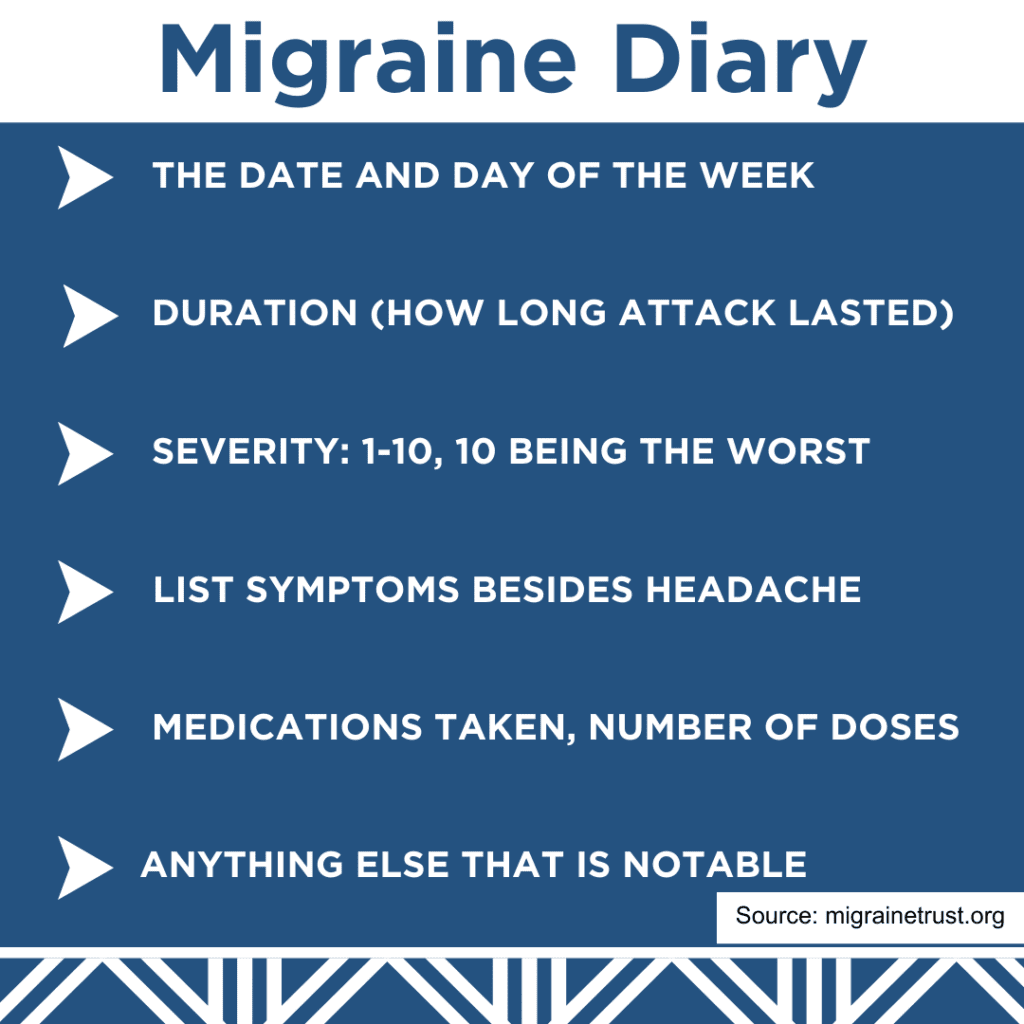
    Keeping a “migraine-diary” stating how long each migraine lasts and what symptoms develop is a good way to present evidence as proof, not to mention a good way to gather information for a doctor. 

    TURN TO KECHES LAW GROUP FOR HELP

    Headaches and migraines are a harsh everyday reality for millions of people in America. If you are considering filing for workers’ compensation or a personal injury lawsuit, know that we are here to help and can guide you through the process.