Move Highlights How Lawsuits Improve Safety Measures in America
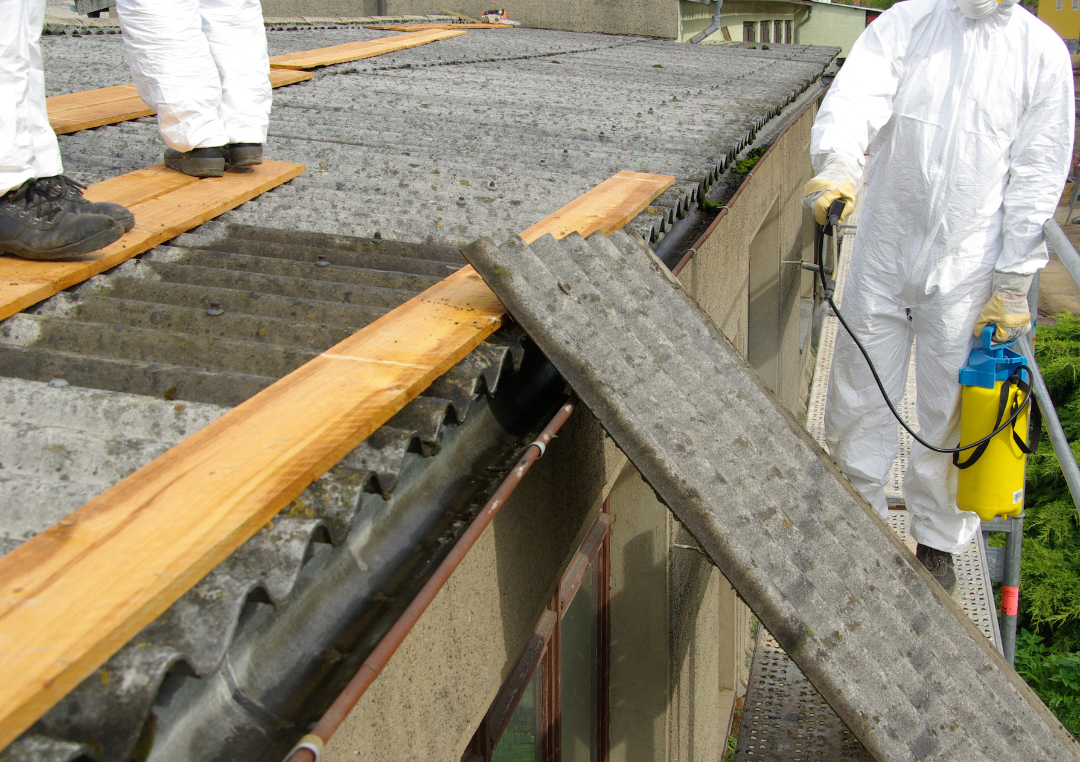
The U.S. Environmental Protection Agency (EPA) announced that the last remaining form of asbestos, specifically chrysotile asbestos, used in America has been prohibited, in a move that marks an important milestone for chemical safety.
“EPA has been working expeditiously to put the nation’s chemical safety program back on track and finally realize the protections of the 2016 law. This action is just the beginning as we work to protect all American families, workers, and communities from toxic chemicals,” said EPA Administrator Michael S. Regan.
How is Chrysotile Asbestos Used?
Chrysotile asbestos is found in automotive products like sheet gaskets and brake blocks. The use of the substance has been decreasing in the United States ever since the EPA first sought to ban some uses more than 50 years ago.
In addition, chrysotile asbestos is used in sodium hydroxide and chlorine, which serves to disinfect drinking water and wastewater. However, two-thirds of the chlorine produced in the United States is produced without asbestos, so transitioning away from the use of the chemical shouldn’t be difficult.
Asbestos exposure is known to cause lung cancer, mesothelioma, ovarian cancer and laryngeal cancer. Every year more than 40,000 deaths are linked to asbestos in the United States.
While thousands of people are affected by asbestos every year, lawsuits on behalf of the victims have brought justice and accountability. When there is a public danger that hasn’t been eliminated, taking legal action is sometimes the best option available.
“Personal injury lawsuits and specifically the civil justice system really have not raised the cost of anything for people and in fact, when you look at it, in the long run, they’ve actually protected people,” says Andrew Abraham, a Partner at Keches Law. “So there’s seatbelts in cars because of personal injury lawsuits. There are all sorts of improvements in your house, in your clothing, in your food, in your medications that you take, in the cars that you drive in, the lawnmowers that you use, the snowblowers that you use have been made better and safer by personal injury lawsuits.”
Abraham says that while there are always people and companies that are looking to take advantage of people, personal injury lawsuits offer a way to defend yourself.
“It’s, unfortunately, a well-hidden fact that personal injury lawsuits, generally speaking, make us safer. Holding people that choose to violate safety rules accountable is very, very important to protect our society and protect our families,” he says.
The skilled Workers’ Compensation and Personal Injury Attorneys at Keches Law are ready to defend you if you have been injured because of someone else’s negligence.
Contact us today so we can help you go through every step of the process to getting you justice and holding those who wronged you accountable.
When buds pop out on trees, flowers push through the mud and snow and you start to sneeze from the newly arrived pollen, you know that spring has arrived.
But with spring comes a new set of road conditions to be careful of and new safety measures to keep on alert with. Keep reading to learn how to stay safe on the road as the snow melts and the weather starts to warm up.
Adapt to Changing Weather Conditions
They don’t say “April showers, May Flowers” for nothing. And if you want to be more accurate, you should add “March mud” to the beginning of the list. Melting snow combining with hotter weather means the ground softens, and the chance of mud, rain, slush and debris on the road increases.
On top of that, the variety of weather conditions in spring will keep you on your toes. Be on the lookout for snowfall, thunderstorms, rain showers and anything else you can imagine. Unusual weather can make for sudden road condition changes, so be mindful of your speed, drive to the road conditions, and take your time.
Before the winter began, you checked your car to make sure you wouldn’t break down in the snow. You considered new tires or even snow tires, put an emergency kit in the trunk and had your car checked out. With the weather changing again, another checkup is in order.
Keeping up with regular vehicle maintenance is always the best way to make sure your car is ready for any conditions. But also, be prepared as drivers may be bolder on the street with warmer conditions and pedestrians may be walking more frequently.
In the spring, the roads are just different than what you’ve been dealing with for the last few months. Look into the new season’s problems so you are prepared and putting yourself in the safest situation you can before getting behind the wheel.
1. What is the Safest Way to Avoid Potholes?
Avoiding potholes isn’t as simple as driving around them. Sometimes avoiding them could mean driving into the other lane, and sometimes driving in them could mean potentially damaging your vehicle. So how do you handle it?
First of all, when you check your car this spring, make sure you look over your tires and suspension, potholes are a lot less trouble with a car prepared for them. Secondly, slow down when you see a pothole coming. Lastly, check the safety of the situation before swerving around a pothole, if a car is in the other lane, it isn’t safe. Also, note that potholes can fill with water and look like puddles, so be careful driving through puddles as well.
2. How Do I Avoid Hydroplaning?
Wet pavement leads to 1.2 million car crashes per year. Hydroplaning, which is when the car’s tires lose traction with the road and glide on the water instead, is a major contributor to the accident total. Avoiding hydroplaning involves making sure you keep traction with the road. Here are a couple quick tips to make sure you do that:
A. Don’t put on cruise control when its wet or raining—make sure you are in charge of the car’s movement in these moments.
B. Slow down and leave room so you don’t slide into another vehicle.
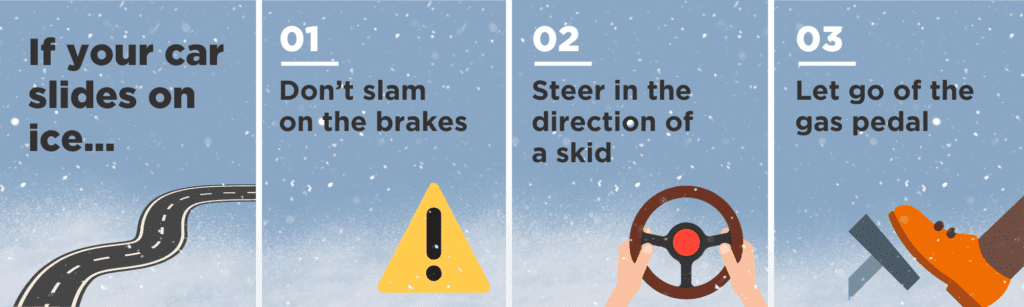
C. Finally, handle a skid properly: drive in the direction the car wants to go, let off the gas and absolutely don’t slam on the breaks or make sudden turns, this will only further add to the car’s loss of traction.
3. Share the Road With Pedestrians and Cyclists
Warmer weather means more people are out and about. More people out and about means more pedestrians and cyclists. So when you’re driving this spring, remember to be vigilant about checking crosswalks, paying attention to sidewalks and road edges, giving bicyclers room and generally paying attention to the people you share the road with.
4. Avoid Animals on the Road
In the winter, animals hide away and hibernate to avoid the weather. But come spring, wildlife like deer return to the woods and potentially, the roads. Every year about 1.5 million car accidents happen with deer alone, so keeping a watchful eye is important.
The hours surrounding dawn and dusk are the most active, and animals are attracted to food, so don’t throw any out the window! Also be careful of areas where a stream or waterway runs under the road, animals may look to cross nearby.
What Other Spring Conditions Affect Your Driving?
So now your car is in good working order, you know how to safely drive in weather and water, you’re patient with pedestrians, bikers and animals. But spring brings some other, unforeseen issues as well.
Trees, grass and weeds are all growing again. But that means pollen. If you are affected by any springtime allergies, including pollen, you know that your eyes might be watering, you might sneeze and cough, and in general, you might not feel well. But that doesn’t affect your need to drive. So what do you need to do to stay safe from allergies behind the wheel?
Taking over-the-counter medications can help reduce symptoms, but make sure you read them and they won’t make you drowsy behind the wheel. Spring clean your car and change the air filters—making your car a better environment can only help you deal with the frustrations of allergy season. Finally, insulate your car by keeping your windows up—use the air conditioner instead of opening windows, and put on circulating air mode, you want less air from outside the car.
How Do I Drive in the Fog?
Precipitation and changing weather can lead to fog. Taking your time and not panicking go a long way to keeping you safe. Put on your headlights so other drivers can see you, but not high beams, which will cause a glare. If driving in thick fog, watch the lines on the center and side of the road to make sure you’re staying in your lane.
If the fog is impassible, turn on your hazard lights and pull off the road into a safe location. Wait for the conditions to improve before continuing. If there isn’t a safe place to go, pull off the side of the road and park. Keep your hazard lights on but turn off your headlights. Take your foot off the brake and put on your emergency brake so no one will accidentally run into you by following your brake lights.
How Do I Drive With the Glare From the Sun?
With the change in daylight hours, the sun’s position is at different spots during morning and evening commutes. This can mean a nasty glare, and aside from slowing down and leaving room between cars, what can you do?
Try adjusting your commute time to see if there is a safer one that still works with your schedule. If that doesn’t do the trick, get some polarized sunglasses to wear while driving. The other way to make the view more tolerable is to clean your windshield. A glare on a dirty windshield is even worse.
If Spring Driving Leads to an Accident, Keches Law is Here
No matter how much preparation you do, accidents still happen. It’s good to know you have a place to turn if you need an attorney after a springtime car crash.
Contact the skilled personal injury attorneys at Keches Law if you need a lawyer, we are ready to hear your story and provide the support and legal guidance you need.
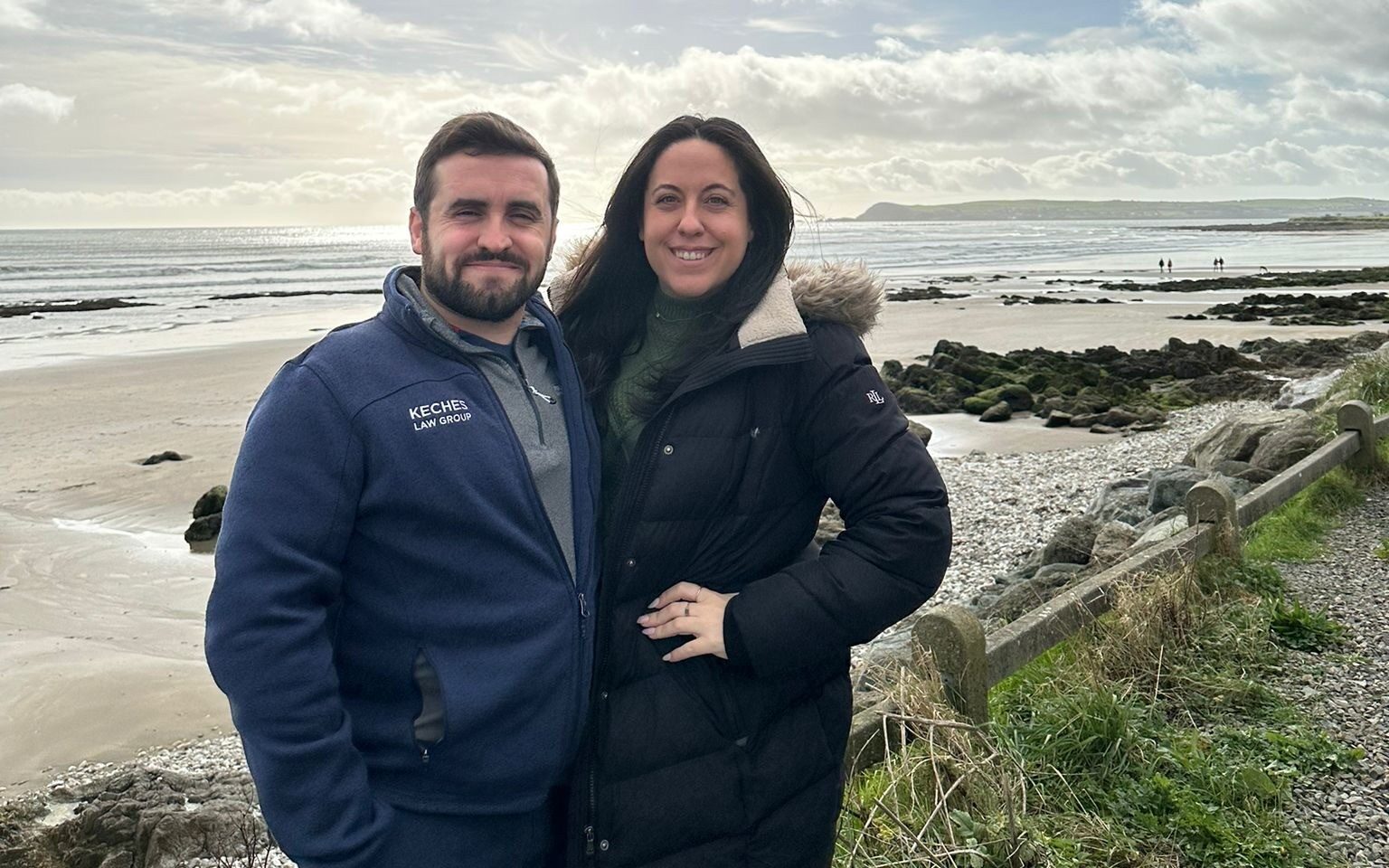
Attorney Sean Kiely had a happy childhood growing up in Waterford, on the southern coast of Ireland. But he says where he is from, emigration to America or another country, is an option people always consider. After he finished college, he decided it was the right next step for him.
Seven years later, he says he wants to stay here forever.
How do Ireland and America Compare?
“It’s very similar to America,” Kiely says about growing up in Ireland.
He says the Irish-American population in cities on the east coast of the United States and specifically in Boston, have done a good job of bringing a lot of the traditions to their new country.
“A sense of family, sense of loyalty to your friends, strong work ethic and trying to do your best for your children, a lot of those have been imported,” he says.
“I’ve talked to relatives who emigrated in the 50s or 60s, they grew up in a very different Ireland. It was a lot poorer, there wasn’t even the right to a free middle school or high school education,” he says. “When I moved to America, the culture shock wasn’t as big as generations prior to me.”
Sean Kiely says when he was growing up, St. Patrick’s Day in Ireland was a family holiday that involved a lot of relaxed celebrating, perhaps going to a Catholic Mass, but mostly it was about spending time together and celebrating Irish heritage.
He says it’s different in America because the people involved have a different history to celebrate.
“Those Irish from decades or centuries ago that came here, built America,” he says. “It was on their backs that a lot of the great cities were built.”
“In America, St. Patrick’s Day is a great day that gives Irish-Americans the opportunity to be proud of their identity and their background. It is evident that Irish-Americans take great pride in their Irish heritage. Alternatively, in Ireland, because there isn’t as much reason for people to celebrate their Irishness, it is hard for those people to understand the Irish-American celebration of St. Patrick’s Day. The Irish culture in America is strong, and it doesn’t discriminate between generations. We are all proud to be Irish.”
Why Did Kiely Come to America?
Growing up, Kiely says the American culture was all around him. The same TV shows that we watch here were on TV there. The movies we watched were shown there. The same gadgets we played with were available there. So he always saw the move as a possibility.
“There was a lot of influence of American culture in Ireland at the time,” he says. “America as a country, I was always fascinated by it.”
Standards of living in Ireland were pretty similar to the middle class lifestyle in America, so he said it wasn’t a move of necessity as much as something he just felt was the right decision for him.
Kiely’s New York Years
Kiely first moved to New York City, where he worked for five years for a law firm where he practiced family law. However, there were drawbacks.
Kiely says family law can be difficult because there really aren’t happy outcomes when families are splitting apart, and kids are often caught in the middle. In addition, cases are tried before a judge, instead of a jury, which he said isn’t what he preferred. Over time he decided to change his primary focus to personal injury.
“This type of law allowed me to do what I wanted to do, what I was trained to do as a barrister in Ireland, which was try cases before a jury and still get to represent everyday normal people,” he says.
Joining Andy Abraham’s Team at Keches Law
After years in New York, Kiely tried a case representing a personal injury victim, and discovered that was the direction he wanted his career to take.
When the opportunity to come to Keches Law was presented to Kiely, he took it. Two years ago, Kiely moved to Massachusetts to join Keches Law Partner Andy Abraham’s team that mostly handles brain injury cases.
Kiely says he loves that in his job he gets to fight for people who have had the rug pulled out from under them and need help to get back on their feet, in particular, he says he sees eye to eye with immigrant clients.
“They’re at more of a disadvantage because they don’t oftentimes speak English fluently, or they don’t have qualifications, or they can’t retrain to a different area,” he says. “It’s my job to fight for them with the same intensity that I would like someone to fight for me if my ability to work was taken from me or my ability to provide for myself or a family was taken away.”
Sean with his family at the Comeragh Mountains in County Waterford.
Kiely Wants to Become an American Citizen
Kiely described how the immigration process is long and ongoing for him, and that he wants to become an American citizen one day.
“Right now I’m in the process of hopefully getting my green card,” he says. “After you get your green card, you can wait around 3 to 5 years to become a citizen.”
He says it’s ironic how he can get up in front of a court and represent someone, but he can’t vote. But he says he does want to become an American citizen one day and he plans on staying in America.
“It just takes time,” he says.
He says while he misses his family, and knows living in America means he misses out on some things that happen in Ireland, he loves his day to day life in the USA. He has a great affinity for American culture and his American friends, has built an incredible career, and plans on staying for years to come.
“Ireland is a great country…I can go and get respite whenever I need to,” he says, “but I’m in the US for the long term.”
Keches Law Group has filed a lawsuit against Choice Hotels International on behalf of a Massachusetts woman who alleges she was a victim of sex trafficking when she was held and exploited on their properties from 2016-2018.
Our lawsuit aims to hold Choice Hotels accountable for not only benefiting from and facilitating the actions of our client’s captors by failing to take effective measures to prevent or stop it, but that Choice ignored the obvious trafficking happening on their properties and were motivated only by profit.
“The hotel industry has long been aware of sex trafficking occurring on their properties and have chosen to profit off the venture rather than put reasonable measures in place to protect individuals and the community,” says Michael Glennon, lead attorney on the case. “Sex trafficking is more common than we’d like to believe, and the bravery of survivors like our client allow us to not only bring to light its existence but to advocate for industry-wide change.”
Headquartered in North Bethesda, Maryland, Choice Hotels is one of the largest hospitality brands in the world, with 22 brands and more than 7,400 hotel locations worldwide.
Choice’s brand portfolio includes familiar names like Radisson, Comfort Inn, Quality Inn, Econo Lodge, and Rodeway Inn, as well as many others. In 2023, the company’s revenue grew 10 percent to $1.5 billion.
In 2008, Choice Hotels adopted a Human Rights Policy that “condemns human trafficking and child exploitation and commits to raising awareness of this issue among the owners and staff of our franchised hotels.”
How are Choice Hotels Allegedly Responsible for Sex Trafficking?
Our client says Choice Hotels was aware not only of what was specifically happening to her, but also that sex trafficking was happening in their hotels in general. She says employees and staff at Choice properties observed clear indications of trafficking, including frequent male visitors, excessive requests for towels, loud fighting and throwing of furniture, physical signs of abuse.
Police reports, news articles, customer complaints and negative reviews were all available for Choice to review. The hotel chain has faced multiple lawsuits in the past related to sex trafficking at their locations, including a decades long claim in Ohio in 2022 and another suit in Houston in 2020.
Given how well-documented the issue of sex trafficking is, our stance is that Choice should have been generally aware of the practice and taken steps to address it.
From 2016-2018, our client was held by an abuser and moved from location to location, being controlled by her traffickers through alcohol, drugs, and violence. Day after day, she was forced to engage in sex acts with strangers for money, against her will, equating to repeated instances of rape, often more than once per day.
She eventually escaped, and she’s spent considerable time trying to move on from her harrowing experience and rebuild her life.
Is Human Trafficking a Hotel Industry Issue?
Hotel and motel companies throughout the hospitality industry have made pledges and campaigns that suggest they are combatting trafficking, but limited changes have been implemented.
The complaint filed on behalf of our client alleges that the hospitality industry as a whole, including Choice Hotels, makes millions in profits by not properly addressing the issue.
It also alleges that there is a general failure to create, adopt and enforce policies and procedures to do something about the problem.
Signs of Sex Trafficking at a Hotel or Motel
Hotel and motel rooms are sold on the privacy and potential anonymity they allow for their customers, but this also makes them ideal locations for trafficking.
The Department of Homeland Security offers a list of signs for hotel teams to use to recognize potential signs of trafficking including individuals who show signs of:
Sleep Deprivation
Injuries
Malnourishment
Fatigue
In addition, hospitality workers should look out for individuals without apparent freedom of movement, no control over money or ID and may have inappropriate dress of lower quality clothing compared to the rest of their party.
Rooms
Hotel workers may notice housekeeping requests such as additional towels or linens but no entry into the room is allowed. Workers may also note extended stays with few or no personal possessions and excessive amounts of sex paraphernalia found in rooms.
Food and Beverage
Employees can look for individuals soliciting male patrons or just loitering in the dining area. Another indicator includes individuals asking staff for food or money, or taking cash or receipts left on tables.
Attorney Michael Glennon Fights for Sex Trafficking Victims
Attorney Michael Glennon is an experienced litigator who has spent the last 15 years working to achieve justice for individuals who have been harmed. As a prosecutor, he led a team that handled juvenile sexual abuse cases and personally handled high profile cases of youth and adult sex crimes and other forms of victimization.
Since joining the Keches Law, he has fought to get financial compensation for survivors and individuals injured due to the negligence of others. Glennon has specialized knowledge and experience in working with individuals who have suffered incidents of violence, injury, and trauma, teaching others on the subject and writing a national guide for lawyers on how to approach cases involving significant trauma.
Glennon has filed cases against hotel brands on behalf of survivors of sex trafficking and exploitation and is part of a national coalition of attorneys seeking to consolidate sex trafficking litigation against the largest hotel chains in the world. He also handles cases involving construction site injuries, inadequate security, civil rights claims, premises liability, and other personal injuries.
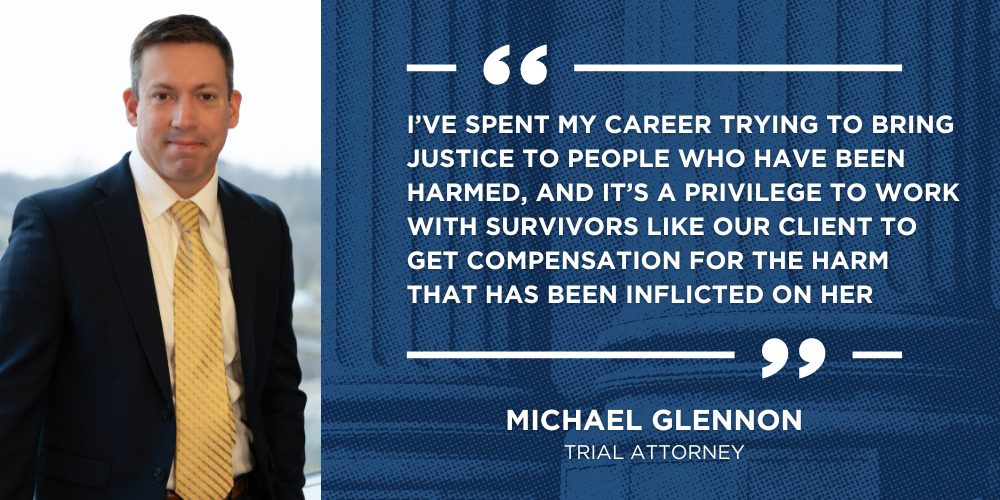
“I’ve spent my career trying to bring justice to people who have been harmed, and it’s a privilege to work with survivors like our client to get compensation for the harm that has been inflicted on her,” Glennon said.
Contact Keches Law if You’ve Been Through an Experience Like Our Client’s
Unfortunately, the harrowing experience our client was forced to endure isn’t an uncommon one. If you or someone you know was a victim of sex trafficking at a hotel, reach out to Keches Law Group right away.
Victims of nightmarish crimes like the ones our client lived through often feel powerless, but our experienced and skilled attorneys are here to demand accountability from those responsible for your traumatic experience.
Contact us today and let us walk you through each step of the process.
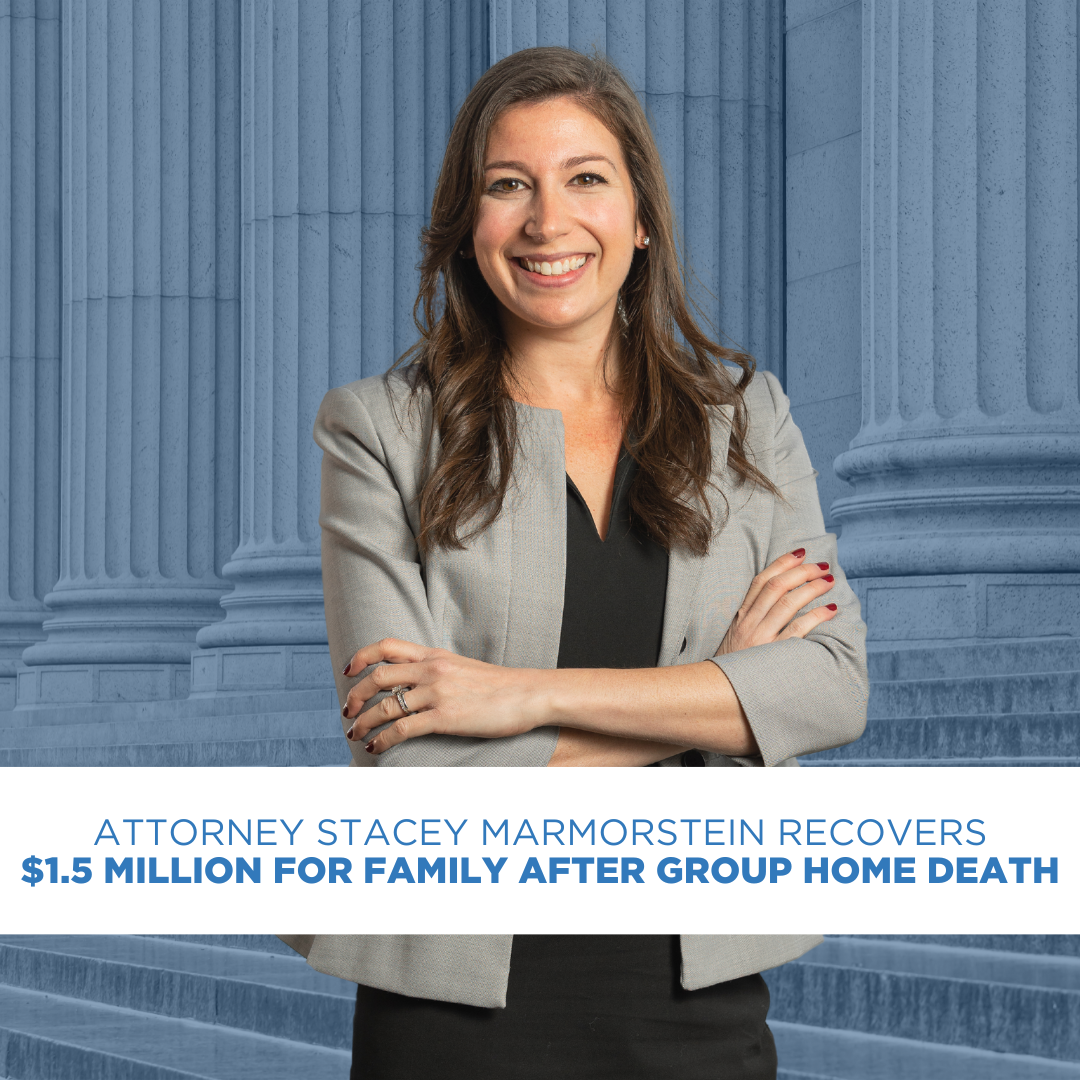
Attorney Stacey Marmorstein’s client worked hard to get her brother into a high-quality care facility – the kind of facility you could trust would look after your loved one. Her brother had been disabled for nearly 30 years, so our client knew the level of support he needed.
Tragically, our client’s brother choked to death while eating lunch unattended, even though the facility was aware that, due to his medical conditions, he was at greater risk of choking.
“No person should be concerned about the safety of their loved ones in a high-quality facility,” said Marmorstein. “Our client’s brother’s death is a tragedy, not only in the horrific way he passed, but because the incident was entirely preventable.”
On behalf of her client, Marmorstein demanded the residential facility take accountability for the man’s death, and the loss that his family feels now that he is gone. The two sides settled out of court for $1.5 million.
Our client’s brother was a person who loved life. Our client says he was always smiling, that he said “yes” to everything. She says he was appreciative of his caregivers and would regularly thank them for their efforts.
He loved Boston Sports, owning countless Patriots shirts he would wear while watching every Sunday.
He had a sweet tooth, and he looked forward to outings to Castle Island for ice cream or even just the occasional Dunkin’ Donuts Munchkins.
Mostly though, he loved his family. He was excited to spend time with them and they have been devastated by this loss.
Marmorstein said her client jumped through hoops to get her brother into this community-based residential facility. Nursing homes, rehabilitation facilities, group homes, and other similar facilities operate based on their ability to provide for the needs of their residents. Our client knew her brother had certain requirements he needed met by his residential facility.
“It took months of planning and coordinating to find the best option for her brother, where he would receive high-quality medical supervision and care, but most importantly, the opportunity to participate in social activities and live his life to the fullest,” Marmorstein says.
An Inability to Care For Their Loved One
Marmorstein’s client worked tirelessly to make sure her brother was in a place that would provide appropriate care. She was completely blindsided by their negligence, especially given his medical history.
“Their inability to care for him in the most basic of ways- to supervise him during lunch- is shocking and repulsive,” Marmorstein says. “The families of this facility- and all facilities- should be able to trust their loved ones are receiving personalized and empathetic care.”
Fighting for Justice
Marmorstein sought to demonstrate the full horror of this tragedy by emphasizing the brief moments when our client’s brother knew he was choking but no one was there to save him, and the power of that realization helped her client get the accountability she was seeking.
“The client finally felt like this facility was owning up to their mistakes and accepting responsibility for taking her sweet brother’s life,” Marmorstein says.
Keches Can Help
If you suspect neglect at a group home or residential facility, nursing home negligence or an elder abuse law violation has caused harm to your loved one, contact us. A talented and capable Keches Law personal injury attorney is waiting to hear your story, and our firm has the resources to investigate your claim.
Choosing to undergo surgery is a serious decision made with all information available, and when a patient is suffering from an illness or trying to recover from an injury, it’s comforting to know that they have a reliable surgeon performing the procedure.
But due to the practice of concurrent surgery, the surgeon performing your surgery might not be who you expect. Keep reading to find out what concurrent surgeries are and what they mean for patients. Read on for the answers to questions like:
Concurrent surgeries occur when one surgeon oversees two surgical procedures at the same time, and the critical parts overlap in timing, making it difficult for the surgeon to be present for some of and sometimes all of both. This is different from overlapping surgeries, where the critical parts are staggered, allowing the surgeon to perform both.
Why Do Hospitals Schedule Concurrent Surgeries?
Not all hospitals agree on the practice, but concurrent surgeries are performed at notable hospitals across the country, including Massachusetts General Hospital.
The Boston Globe’s Spotlight Team reported that hospitals allowing double-booking see it as an efficient use of top specialists, reducing wasted operating room time. MGH analyzed orthopedic cases from 2013-2014, finding no significant difference in complication rates between overlapping and non-overlapping cases.
But some MGH employees, including anesthesiologists, reported numerous problems with concurrent surgeries, raising concerns about patient care and medical practice from 2005 to 2015.
What Are the Potential Problems with Concurrent Surgeries?
Concurrent surgeries pose ethical concerns as attending surgeons may be stretched too thin, which can affect patient care.
While there are scenarios where concurrent surgical procedures may be necessary—such as an emergency situation requiring more procedures than available surgeons—this is not often the case. But hospitals schedule concurrent surgeries during elective procedures to maximize efficiency.
Regardless of experience or skill, your doctor can only be in one place at a time. Concurrent surgeries mean the attending surgeon’s attention is divided, which can lead to delays in addressing complications, increased time under anesthesia, and the involvement of less qualified surgeons handling critical aspects of a procedure.
If My Surgeon Isn’t Performing the Whole Operation, Who Is?
It’s common to assume the attending surgeon will be performing the entire surgical procedure, but some of these procedures take hours. It’s logical that surgical residents, essentially trainees, might perform the simpler, more routine aspects of procedures under supervision, while the attending surgeons are responsible for the important, more difficult aspects of each surgery.
For example, it is common for residents to “close up the surgical site” while a surgeon explains how the surgery went to the patient’s family.
While surgical residents are trained and capable of performing the aspects of procedures that they are expected to, if an attending surgeon is performing another surgery in another room, the resident is now left to operate on a patient without supervision. The patient likely isn’t expecting their procedure to be done by anyone besides the surgeon they spoke with.
What Do Lawyers Recommend Regarding Concurrent Surgeries?
Attorneys Julie Jyang and Jeff Catalano know that a lot is expected of hospitals, and when surgery is needed, patients and their families go through potentially life altering decisions. The transparency of informing patients about concurrent surgeries raises ethical questions, especially when buried in fine print.
What Should I Ask My Doctor Before Scheduling Surgery?
Understanding that concurrent surgeries have been performed at hospitals throughout the region, here are five questions Jyang and Catalano suggest asking before scheduling a procedure.
How will a concurrent surgery affect my care?
What can/will you (the surgeon) do to ensure my safety during a concurrent surgery?
How does the medical team work together during a concurrent surgery?
What is the plan if something goes wrong?
Can I meet with the members of the surgical team who will be involved with my surgery? Can you explain their roles/involvement?
What Are My Options if I’ve Already Consented to a Concurrent Surgery?
If you’ve asked the questions and found out that your surgery is happening concurrently with another procedure, what options do you have as a patient?
“Speak up! Schedule a meeting with the surgeon or provider about your concerns or questions about the practice,” Jyang says. “Get clear communication and clear answers to your satisfaction. Be as educated as possible on the practice. Know what your options are – are there alternatives where you can avoid concurrent surgeries? Can you get a second opinion?”
Was My Surgical Complication Due to Concurrent Surgery?
If you suffered complications during surgery, you may want to review your surgical records and have a conversation with your healthcare provider to find out if your procedure was performed concurrently.
Transparency is important in establishing trust between a medical facility and its patients. Determining if your surgeon was focused on you during your procedure or if their attention was divided without your knowledge is key to establishing whether your complications could’ve been avoided.
The American College of Surgeons describes informed consent as an ethical standard meant to enhance the surgeon/patient relationship. All information should be presented accurately and compassionately.
What Details Should Medical Providers Disclose Before a Procedure?
The nature of the illness and what would happen without treatment
Potential operation details and risks
Common complications and benefits of the operation
Alternative treatment options, including avoiding surgery
The different medical providers who will participate in the surgery and their roles, which is especially relevant for concurrent surgeries
Contact Keches Law for Help After Your Surgical Complications
Keches Law Group supports patients affected by concurrent surgeries. If you had a procedure done with unnecessary complications you believe are due to concurrent surgery, contact our skilled medical malpractice attorneys for help.
We can help you determine if you were the victim of concurrent surgery and what the next steps you should take are. Contact us today.
Over the course of a case, our attorneys spend a lot of time with their clients. There are long days, late nights, shared meals, and bonds formed. When the case ends, our lawyers and staff share in the joy of a win or offer a place to turn when things don’t work out. We know our clients, and know what the case means to them, their family and their future.
“Even after their case has settled, I always tell my clients, this doesn’t terminate our relationship,” says Keches Law Workers’ Compensation Senior Attorney Lauren Van Iderstine. “I always make a joke that ‘you’re stuck with me for life’.”
What are Google Reviews?
When people search for a business on Google or look up directions on Google Maps, one of the first things they will see are the business’s Google reviews. These are reviews left by customers of the business so that other people can make an informed decision about whether to go to the restaurant, buy the product, or in Keches Law’s instance, hire an attorney.
According to Forbes, more than 60% of customers check Google reviews online before they visit a business.
Why Do Google Reviews Matter When Choosing an Attorney?
Van Iderstine says she always encourages clients to leave reviews online because it helps show other people looking for a lawyer the whole experience.
“It’s giving their word and what they have to say value,” she says. “It’s a hard journey, so at the end of that, asking for them to share their experience…really means a lot to them.”
Van Iderstine personally reaches out to clients to ask for reviews whenever she can and consistently receives high marks, but she says if a review isn’t positive, that is useful as well.
Transparency is one of the hallmarks of Google Reviews. Customers can see what former customers thought, and Van Iderstine says that if someone had a bad experience, it just shows her and her team an area to improve on.
Keches Law Senior Attorney Kelli Silva says Google Reviews provide insights to potential clients about whether an attorney might be the right fit for them personally.
“To me choosing the right attorney is as important as choosing the right doctor, so Google Reviews give clients some insight into who we are as people and attorneys and if we would make a good team,” she says.
When a person is trying to choose their attorney, to guide them through what will be a very difficult time in their life, Van Iderstine says Google Reviews offer them the opportunity to take charge.
“People, when they’re injured, feel like they no longer have control of their lives,” she says. “I want people to have control of their lives. They’re looking on Google because they want to have that little bit of control left. They want to be able to choose their own lawyer.”
Lauren Van Iderstine wanted to be an attorney since she was a kid, she says her dad likes to say she would argue about what color the sky is. As she grew, she began to pursue becoming a judge but learned that it wasn’t right for her, because it didn’t have the same connection to the client.
“I realized I wanted to be actually practicing law, and be able to fight for my clients individually,” she says.
When her father was injured at work and she was connected with Keches Law, she says she immediately felt at home. Keches Law attorneys worked with her throughout the process, and she says what really resonated was that they were helping her but teaching her at the same time.
“It just immediately felt like where I wanted to be. It felt like home,”she says.
Throughout her busy days with her busy case load, she says she has trouble turning clients down because she knows what it feels like.
“I see my dad in a lot of clients. I feel like that has given me a better understanding and perhaps more patience with people,” she says. “It helped me in a lot of ways appreciate what people go through and what this whole process does to them.”
Client Feedback Helps Us Keep Getting Better
When Keches Law receives a review, someone on our team reads and responds to each one along with documenting any learnings to ensure we are continuously improving our client service.
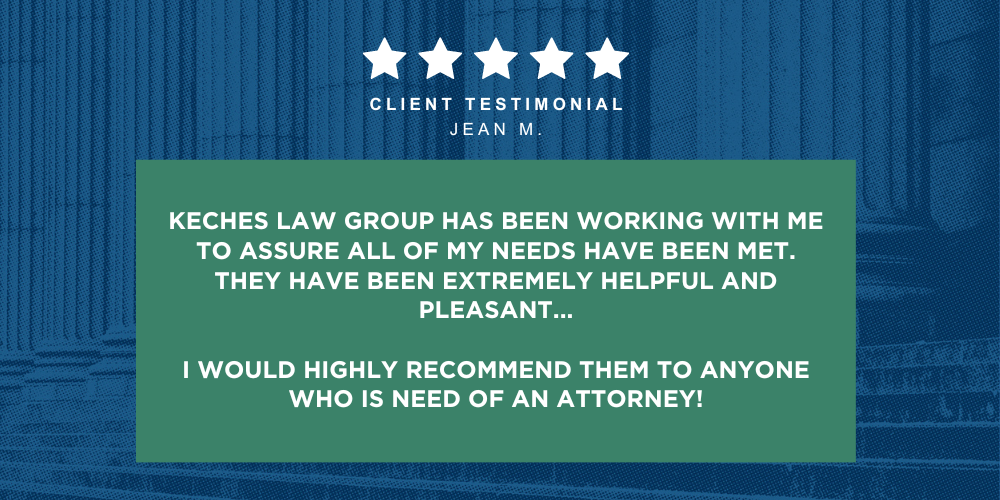
“Reviews help our attorneys to improve their practice, as well as helping people who are looking for legal help,” Client Experience Manager Jill Solimini says. “Reviews help potential clients see that they are not alone, and that other people have been in a similar situation as them. They can be reassured while choosing an attorney that these clients found the attorneys at Keches Law group to be very attentive, compassionate, and dedicated during what can be a very trying time in their lives.”
In short, in an industry where trust is key, Google Reviews show our potential clients that we are trustworthy.
Customer engagement is one of the ways that Keches Law has built a community with our clients. We want our clients to feel heard, and hopefully feel loyal so that if they know someone else that needs an attorney they’ll think of us.
Van Iderstine says it is important for the firm to gain trust, but reviews also help her stand out as individual.
“We want them to know the lawyers and know that the lawyers are good at what they do,” she says. “Not just that Keches Law Group is good at what they do.”
Silva says having a good reputation is crucial for our business’s success and reviews are a window into how pleased our clients were with their experience.
“Reviews showcase the incredible people we have working at the firm tirelessly day in and day out for our clients,” she says.
According to Solimini, Keches Law has had an excellent response from our clients through online reviews.
“We currently have over 1000+ reviews with an average 4.8 rating on just Google alone, with many of our attorneys receiving Avvo Client’s Choice Awards, as well as Martindale-Hubbell’s Gold and Silver Client Champion Awards,” she says.
Van Iderstine says the reviews are helpful for clients who are in the middle of a tough decision at an even tougher time.
“They want to look online and do the research for themselves and know that they’re choosing the person who is right for them,” Van Iderstine says. “It’s ultimately their choice, and I want it to be an easy choice for them.”
Let Keches Law Group Help You
If you are in need of a personal injury lawyer or workers’ compensation attorney, reach out to Keches Law Group. We have the reviews to support the claim that we help people get through traumatic moments in their lives every day.
Contact us today and let us help you in any way we can.
During this regular season, Keches made a major commitment through the “Catches for College” sponsorship promotion with 98.5 The Sports Hub radio network. For every catch made by a Patriots player, Keches committed $100 to its education fund. By the end of the Patriots’ last game, Keches had contributed $35,100 for 351 completions.
“We’re proud to be the official law firm of the New England Patriots and are thrilled to be able to raise such a sizable amount of money to put towards our scholarship fund,” says Keches Law Managing Partner Sean Flaherty.
Catching Up on the Season
The season started off hot with 66 catches through two weeks, but as the team skidded and the quarterback position bounced between Mac Jones and Bailey Zappe, the receptions slowed. The lowest total of the season came in the final game on the schedule against the New York Jets played in the snow on Jan. 7 where the team completed just 12 passes.
The Patriots were bit by the injury bug in a major way this year and it hurt their ability to bring in receptions. Top target Kendrick Bourne tore his right ACL during week 8 and missed the rest of the season. Starting running back Rhamondre Stevenson was shut down because of injury and tight end Hunter Henry missed multiple games as well.
When it was all said and done, the team leader in receptions was running back Ezekiel Elliot with 51, with rookie standout Demario “Pop” Douglas coming in second with 49.
Patriots Partners
The initiative came in tandem with Keches Law being named the official Law Firm of the New England Patriots this year. As part of the partnership, during games Keches Law advertised on Gillette Stadium’s brand new 22,200 square-foot video board, which is the largest curved outdoor video board in the United States.
Keches Cares
Keches Law has a long history of community involvement and charitable causes in Massachusetts and beyond. Keches Cares, the non-profit charity founded by Keches Law Group, raises funds throughout the year. For the past five years, Keches Law has awarded a college scholarship. North Reading resident Molly Harrington was the 2023 recipient.
You put on the jacket when you go outside, you turn the heat up in the house and you warm up the car before you get in, but do you think about how to keep yourself safe from the cold the rest of the time?
Winter weather can lead to lots of common personal injuries. With that in mind, here are 5 tips to help you enjoy your day safely whether its cold enough outside to warrant a jacket, frigid enough to make you think about gloves, mittens and a scarf.
1. Dressing Warmly Can Prevent Cold Weather Injuries.
In the fall and the summer heat has died down, we start putting on more sweaters and sweatshirts and then eventually switch to a jacket. But when it’s truly cold outside, layering is important to be able to adjust to different temperatures.
Remember it’s easier to take a layer off than to add one when you’re away from home. So consider an extra shirt or sweater in addition to a nice warm winter coat.
Hypothermia occurs when your body drops below 95 degrees. When your body’s temperature drops, it uses stored energy to try to warm up and hypothermia takes place when all of that stored energy has run out and your body can’t keep itself warm anymore.
When you get wet, your body loses heat quickly – and when it’s cold out your chance of hypothermia only increases. So when it’s cold, make sure you stay dry and warm.
In addition, hydration improves circulation, which helps keep you warm. So while you don’t want to get wet, you do want to make sure you’re drinking plenty of fluids.
3. Don’t Ignore Frostbite or Hypothermia Symptoms!
Out in the winter weather, it’s easy to dismiss the signs of coming personal injuries like hypothermia or frostbite as “just being cold.” Don’t do it!
Numbness, shivering, slurred speech and drowsiness are all signs of hypothermia. Cold prickling or numb skin; or red, white, bluish-white, grayish-yellow, purplish, brown or ashen patches on your skin are signs of frostbite. If you start experiencing these symptoms—take action! Find a warm place to go and if necessary, seek medical assistance.
4. Focus on Traction to Prevent Slip and Fall on Ice this Winter.
When ice and snow are on the ground, or even if it is cold enough to form black ice, slip and fall injuries are a major concern. Make sure to wear footwear with good traction and be careful when walking to avoid falls.
5. Safe Heating Practices are Important.
There’s nothing quite like getting cozy in front of a fire in the fireplace. But if you aren’t careful, you might be looking at a major potential burn or fire problem.
Pay close attention to fireplaces, space heaters and any other heating devices you might have and turn them off when they aren’t in use. Also, make sure not to leave flammable materials near them.
6. Safety First With Winter Sports and Activities.
Winter sports like ice hockey, skiing, or snowboarding come with a lot of potential for injury. But even less obviously risky activities like sledding, snowshoeing and skating come with significant chances of injury, so be sure to use caution when enjoying the cold weather.
Make sure you’re properly equipped with all the right safety gear and equipment for any winter activity. Wearing warm clothes and protective equipment isn’t enough; stay aware of your surroundings, know your limits, and avoid unnecessary risks to prevent injuries.
Injured? Keches Law Can Help You With Any Cold Weather Injury.
Winter weather personal injuries are always a possibility. If you find yourself facing personal injury, remember to reach out to Keches Law.
White powdery snow serenely falling is a beautiful sight to take in when you’re in your cozy living room in front of a roaring fire, but it’s a bit less exciting to see it falling when you’re halfway to work and know the commute home will include driving in wintery conditions.
When the weather gets colder, you need to be ready for different road conditions – snow, ice, slush, rain, and more. Read on to learn how to put yourself in a better position to be safe from winter conditions—along with your passengers and anyone you’re sharing the road with.
Prepare Your Vehicle for Driving in the Winter
A car needs to be maintained throughout the year, but winter conditions put extra pressure on your car and regular maintenance can greatly reduce the safety risks of driving in cold weather. So when you feel that first biting cold, set up a schedule for how to maintain your vehicle.
Check Your Tires. For your tires to be effective, you need enough tread on your tires and good air pressure. The tread on your tires needs to be able to grip the road. Snow tires grip the road better than your average alternative. Although snow tires are obviously a good option, start out with the basics. Your tires should have proper tread. Also, cold weather makes your tires lose air pressure, so check that they are properly inflated. Throughout the winter, make continuous checks and replace them if they aren’t in good shape.
Check Your Battery. When batteries get cold, they don’t work as well. Electric cars can drive fewer miles and need more charging time during the winter. But ordinary car batteries aren’t immune. Check your battery proactively to avoid needing roadside help during bad winter conditions.
Inspect the Basics. Brakes, lights and wipers are all essential to making sure your car is running smoothly. When you are facing an icy or snow-packed road, you want them all working. Keep an eye on your essentials all winter.
Make a Winter Emergency Vehicle Kit. Snow or ice on the ground increases the possibility of an emergency. Pack a kit and put it in your car with extra food and water, warm clothing, a flashlight, window scraper, blankets, medications and anything else you think would be appropriate. Be prepared for everything—some other options include sand, kitty litter or salt to help with traction, cell phone chargers, blankets and a first-aid kit.
Master Winter Driving Techniques
Inspect Your Car Before You Leave.Clear your car’s tailpipe, scrape windows, warm up the car, make sure there isn’t ice blocking your lights, and don’t leave snow on the roof. Before you can drive safely, you need to make sure the car is safe to drive.
Slow Down. It might seem obvious, but sometimes people speed up when they are nervous on the road. Even with snow falling or ice and slush on the ground, keep calm, and drive your car slower.
Keep Your Distance From Other Cars. If there’s ice or snow on the road, it will take more time to stop than usual. Make sure you brake earlier to allow extra room to stop.
Think Gentle, Not Abrupt. Slamming on the brakes, hitting the gas, or swerving can lead to the car losing traction, and you may lose control of your vehicle. Be deliberate and patient with your maneuvers.
Steer in the Direction of the Skid. When your wheels regain traction, you don’t want to have to overcorrect and cause additional sliding. If you steer into the skid you will have an easier time staying in your lane.
Don’t Use Cruise Control. When road conditions are bad, you need to be in control every second so you can make a quick decision and can feel what speed is appropriate.
Keep Going Up a Hill. If possible, continue driving up a hill, don’t stop. You might get stuck where you are or slide backwards if you stop.
Know When to Sit Out. If the road conditions are terrible, don’t get into the car in the first place. If there are whiteout conditions, pull off the road to a safe place and wait for conditions to improve.
Handling Winter Weather Car Emergencies
Imagine you’re driving and a storm blows up suddenly, causing whiteout conditions. You know that sometimes you need to sit out, so you pull the car to a safe spot. And because you prepared your car for the winter, it’s in good condition and has an emergency kit. You can wait out the worst conditions where you are. You scraped your windshields and windows, swept off any snow and cleared your tailpipe before you left, but now what do you do?
Maintaining your safety in an emergency is also vitally important, here are some quick actions to take:
Put On Your Hazard Lights.
Keep Your Headlights On.
Recheck Your Tailpipe.
Make a Call if You Have Service.
Be Patient.
These actions are simple and straightforward but critically important. The lights and hazards will increase your visibility during a situation where your car is hard to see. Checking your tailpipe will prevent carbon monoxide from pooling in your car. Making a call will allow you to let people know where you are and what situation you’re in. Patience, perhaps the most important step, will help you from making a bad decision by getting back on the road.
Hurt In a Winter Car Accident?
Drive safe but know that if you are injured in a car accident, you have a place to turn.
Keches Law personal injury lawyers are ready to hear your story and help you navigate the process after you’ve been injured in a car accident. Contact us today to discuss your case.