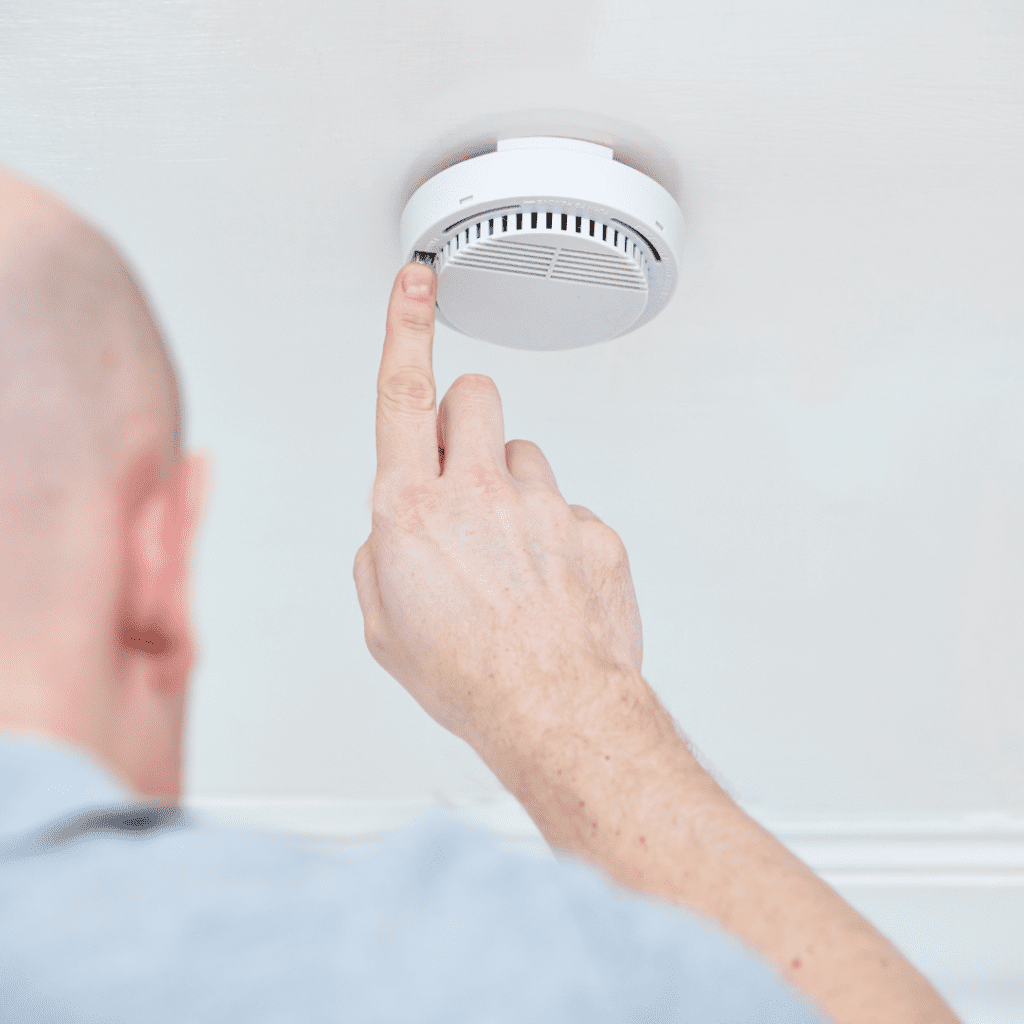
In the blink of an eye, a house fire can change your life. Have you taken precautions to protect your home against a fire?
Every 23 seconds in the United States, fire departments leap into action. In 2021 alone, 1,353,500 fires ignited, resulting in 3,800 deaths and 14,700 injuries.
Here are 6 fire safety tips to prevent fires, protect lives, minimize property damage, and be well-prepared for the unexpected!
1. Check Your Smoke Alarms
Have you ever gotten startled when your smoke alarm goes off unexpectedly? It’s not just a noisy gadget, it’s your first line of defense in a fire. Let’s make sure yours is up to the task!
Location Matters. Smoke alarms are legally required on every level of your home and near bedrooms or sleeping areas.
Test Monthly. Don’t just assume your smoke alarm works, test your smoke alarm every month to make sure it’s functioning.
Battery Check. Replace batteries at least once a year, if you hear a ‘chirping’ sound, that means it’s time for a new battery.
To swiftly respond to a home fire, create and regularly practice a family escape plan. Ensure all family members know their roles in case of a fire, identifying two exits per room and an outdoor meeting point. Practice day and night evacuations, aiming for under two minutes. Assign someone to oversee the safe evacuation of infants, young children, or pets, with a backup person if needed.
Grease fires can ignite quickly and become extremely dangerous. To prevent grease fires, use a thermometer to avoid overheating the oil. Keep a lid nearby to smother flames in case a grease fire does occur and remember to never use water to put out a grease fire.
Other helpful tips:
Monitor Appliances and Electrical Cords. Inspect your appliances and electrical cords for signs of wear or damage. Replace or repair damaged items such as faulty appliances or frayed cords can lead to electrical fires.
Use Proper Cooking Utensils. Wooden or plastic utensils are less likely to conduct heat and cause burns. Be sure to keep oven mitts or potholders handy to protect your hands.
4. Be Careful with Matches and Lighters Around Kids
Store all matches and lighters up high where children cannot see or reach them – preferably in a locked cabinet. Teach your children that matches, lighters and fire extinguishers are tools for adults and are not toys.
5. Use a Quality Space Heater
It’s important to invest in a quality space heater from a reputable manufacturer with safety features like tip-over and overheat protection. Place the space heater on a stable, flat surface away from foot traffic and out of reach of children and pets. There should be at least three feet of clearance around the heater, and it should never be placed near flammable materials or water sources.
Never leave your space heater running unattended, and to prevent it from overheating plug it directly into the wall, not a power strip or extension cord.
6. Dispose of Cigarettes Properly
Careless smoking is the leading cause of fire related deaths in North America. Do not smoke in bed or when you are drowsy. A misplaced or dropped cigarette can lead to fires. Make sure cigarette butts are soaked with water before being discarded.
You just had a head injury. Maybe you were in a car accident, had a fall, or you suffered a blow to the head while playing sports—whatever the reason, you need to know what to do. Here are five steps to take to help you process what happened and put yourself in the best position for recovery.
1. Validate and Assess Your Head Injury
After being injured, the first thing you should do is take a moment to self-analyze. Is it a serious injury? If so, can you move? Do you feel like you can get yourself help or do you need someone to help you immediately? No matter what caused the injury, you need to take a second to clarify to yourself what you think is happening in your own body.
After you have evaluated yourself, you know how you feel, but sometimes symptoms aren’t obvious to the sufferer. If you are with people, talk to someone and ask them if you’re behaving normally. If you are alone, call someone and talk to them to see if you need to call for help.
Don’t take any unnecessary chances. If there is severe pain or bleeding, if you fell unconscious or felt sleepy or confused, or have serious neck pain, you need to call a medical professional right away.
If you are with other people, ask them to call an ambulance or doctor for you. But if you are alone, make sure you contact a medical professional to come help you.
4. Take Notes and Highlight Head Injury Symptoms
When you file a personal injury lawsuit or workers’ compensation claim, it will be vital that you have all the details of what happened. Take a minute while you wait for a medical professional and write down what happened, where it happened, and any symptoms you are feeling at the moment. If you are seriously injured and with another person, have them take the notes.
Do you have ringing in the ears, blurred vision, balance problems or dizziness, light or noise sensitivity, headaches or memory loss? Not only will documenting your symptoms and taking notes be essential in helping medical professionals treat you, it may also may prove important in any legal action that may arise.
When you’ve injured your head, it’s essential to remain calm, at rest and to avoid noise, lights and electronics. Don’t panic and try your best to keep yourself calm until help arrives.
Almost everyone’s been there. You just hit your head and you can tell that something isn’t quite right. Now you need to consider whether you might have suffered a traumatic brain injury.
Read on to learn more about TBI and what to do if you’ve just suffered from a head injury.
What is a Traumatic Brain Injury?
The words “traumatic brain injury” feel pretty big and scary, don’t they? Your mind probably goes to sports injuries, car crashes, and other extreme examples involving a direct blow to the head.
But TBIs are far more common than you might think, and they come with a wide variety of symptoms—and you don’t necessarily have to hit your head to experience one.
A traumatic brain injury can be caused by a forceful bump, blow, or jolt to the head or body or from an object that pierces the skull and enters the brain (like a bullet). But other common ways to experience one is during a fall or car accident, with the TBI occurring because of the whip of the head.
Not all head injuries result in a TBI, and not all TBIs are caused by direct impact to the head. The most common TBI is from a fall, representing 40.5% of all TBIs. Being struck is the next highest cause at 15.5%. This group includes sports injuries. Car crashes represent 14.3%, assaults cause 10.7% and 19% are other or unknown causes.
TBIs are split into two groups: penetrating TBI, which means the skull is pierced during the injury, and non-penetrating TBI, which is when the skull is hit hard enough from the outside to move the brain inside it.
In 2021, there were 190 reported deaths per day from traumatic brain injuries (TBI) and 214,000 TBI-related hospitalizations in 2020. The highest rates of patients and deaths came from people aged 75 or older, and men were two times as likely to die and three times as likely to be hospitalized with a TBI then women.
TBI can lead to short-term issues with basic functions like thinking, comprehension, communication and action. More severe TBIs can lead to permanent disability or death. While some TBIs are immediate, others can occur gradually over hours, days or weeks.
Brain damage from a TBI can be a “focal injury” – limited to one area of the brain. Or it can be a “diffuse injury” which is more widespread. Brain bleeding and tearing can injure nerve fibers and cause inflammation, metabolic changes and brain swelling.
Types of TBIs:
Diffuse Axonal Injuries. A common brain injury affecting the brain’s white matter that usually occurs from brain twisting or sudden stops and is common in car crashes, falls and sports injuries.
Concussion. A mild TBI can take several months to heal or in some cases may never fully heal. A concussion occurs when a blow or jolt makes the brain move quickly forward or backward in the skull. Lots of things can cause a concussion, but they are common in sports injuries, falls and car crashes.
Hematomas. Bleeding in and around the brain. There are several different classifications of hematomas depending on where the bleeding takes place.
Contusions. Brain bruising or swelling caused when small blood vessels bleed into brain tissue. They can appear up to a day after the injury. Contusions typically happen when the head slows down abruptly causing the brain to bounce back and forth such as in a high-speed car crash or shaken baby syndrome.
Skull Fractures. Breaks or cracks in bones that makeup the skull. These are the result of blunt force traumas.
Chronic Traumatic Encephalopathy (CTE). A neurological disorder that affects thinking, comprehension, communication, movement and can lead to problems with impulse control, depression, confusion and irritability. CTE happens after multiple blows to the head and can take years to develop. CTE can also develop in retired athletes with years of blows to the head. It’s most common in boxers, football players, soccer players, rugby players and wrestlers are also at heightened risk.
Depending on how your head was injured you have a few options legally. If it happened because of another person’s negligence, you may have a case for a personal injury lawsuit. If the injury came at work, while performing typical work functions, you may be eligible for workers’ compensation.
Personal Injury Claims
TBI caused because of another person’s recklessness or carelessness may qualify for a personal injury lawsuit. Our personal injury attorneys have the expertise necessary to help you with the process.
According to Trial Attorney Sean Kiely, mild traumatic brain injuries don’t always show up on tests like MRIs or Cat scans. He said oftentimes, more advanced testing is required, such as diffusion tensor imaging (DTI), which is a test that can measure damage to white matter in the brain. Another important way to show how the injury has affected the victim is to gather information from family members or friends.
“You know it’s very real, what they’re going through, when you speak to their family, and friends of theirs. People that knew them prior to the incident and after the incident and how it has affected their personality,” he says. “Mild TBI is oftentimes no less devastating to a person’s life.”
Workers’ Compensation Claims
Workers injured or ill from an incident that occurs within the range of the workplace is eligible for benefits. Workers’ compensation is there so injured workers can obtain wages lost because of a partial or total disability. It can also cover medical and retraining expenses.
TBI is one of the most common workplace injuries in the United States, with 1.7 million people suffering from TBIs every year, costing over $75 billion. TBI led to 22% of work-related injury deaths between 2003-2008 and 46% of fatal falls at work. Many sufferers are unable to ever return to work.
Between 20-25% of workplace trauma is classified as a traumatic brain injury. Of head injury claims filed in 2018, 60% of them involved TBIs.
Kiely says the trial is about more than compensation, it’s about getting his clients the justice they deserve. However, compensation is important to enable the individual to get on with their life the best they can.
Fall isn’t just about football games and pumpkin spice lattes; it comes with its own seasonal safety issues. When you’re on the road this autumn, you need to take note of several potential dangers.
The clearest sign of autumn is when the leaves fall, coating yards until they are inevitably raked away. But remember that the same leaves fall onto the road too.
Watch out for Fallen Leaves on Autumn Roads
You might be planning to take a vacation during the fall months to spot the changing leaves and foliage. But you may not realize that after those leaves fall, they can stick to the road and lead to a lot of trouble.
You might park further from sidewalks because of leaf piles. Fallen leaves block drainage and cause puddles and slick roads. They hide potholes and road markings from you, and most importantly, turn slick and slippery when left on the road.
When leaves stick to the road, they can be as slick as ice. If your car slides on the leaves, remain calm, and don’t slam on the brakes. Continue to turn the way you want to go and let go of the gas pedal.
It can be especially difficult to stop on wet leaves because a layer of water coats the top of the leaves like it does with ice and cars aren’t as good at stopping in water. In fact, if you’re driving 45 miles per hour and you want to stop, you need 80 feet of space, but on slick wet leaves, the amount of space increases to 200 feet.
Avoid these issues by being prepared. Clean leaves off your car before you leave, slow down if you see leaf-covered roads, keep a proper distance between your car and the ones around you and make sure your car has good tires.
Less Sunlight Poses a Fall Driving Problem
In the months leading up to the end of daylight savings time, the dark comes earlier and earlier and the driving fatality rate per mile of travel is about 3 times higher during the night. So slow down, put extra space between you and the car in front of you, turn off any distractions and focus on the road.
Watch for children at bus stops or walking to and from school.
Keep an eye out for deer. Fall is deer-breeding season so watch for them in the road. Deer often travel in groups so if one crosses the road, be sure to watch for more to follow.
Fog, Frost and Fall
With the weather changing, it’s more likely to wake up to a frost covered car or a foggy haze to drive through.
Driving in fog and dealing with frost can be handled in 5 steps.
Prepare. Before you leave, take the time to scrape the ice off not only your windshield, but your mirrors, side windows and back window. Warm your car up and turn on the defroster.
Take your time. Worse conditions should always be approached through the lens of safety first. Frost can lead to slippery roads, and fog requires close attention. You should go into your drive with the attitude “You’ll get there when you get there.”
Make yourself visible. Fog makes it hard for you to see. But it also makes it harder for everyone else to see you. High beam lights cause glare, which makes it more difficult to see, but if you turn on your low beam lights other people will be able to give you the proper distance on the road.
Stay in your lane. If the fog is thick, watch the lines on the center and side of the road to make sure you are staying in the lane you are supposed to.
Know when to take a break. If the fog is impassible, turn on your hazard lights and pull off the road into a safe location. Wait for the conditions to improve before continuing. If there isn’t a safe place to go, pull off the side of the road and park. Keep your hazard lights on but turn off your headlights. Take your foot off the brake and put on your emergency brake so no one will accidentally run into you by following your brake lights.
During the school year, more cars are on the road, more kids are walking to school and more bikes are riding on the side of the road. Make sure you’re being careful, safe and taking your time as you drive through school zones and before and after school hours. The most dangerous hours of the day for school-aged pedestrians are between 7-8 a.m. and 3-4 p.m.
Pedestrian injuries are the fifth leading cause of injury-related death for children ages 5 to 19 in the United States, so be prepared for frequent stops and follow all traffic laws regarding school buses.
Tire Maintenance. As temperatures drop, so does tire pressure. Check your tires for adequate tread and proper inflation to improve traction on slippery roads.
Vehicle Maintenance. Regular maintenance is important all the time, but make sure your brakes, lights, and fluids are in good condition this fall.
Sun Glare Awareness. Sunrises and sunsets can create blinding glare. Keep sunglasses handy and use your sun visor as needed.
Check Your Vehicle’s Heater and Defroster. The car heater and defroster are crucial when it starts getting cold out. Before the cold weather hits, ensure they are working correctly to keep your windows clear and passengers warm.
Use Your Defogger Correctly. The problem that no one knows the answer to: do you use hot air or cold air to defrost your windows? As it turns out, you should use both! Turn on the heat and the air conditioning, as the air conditioner helps to remove moisture from the air and clears fogged windows more quickly.
As the leaves fall, daylight fades, and school zones become busier, you need to prioritize safety. So adapt your driving habits and appreciate the beauty of autumn while ensuring you arrive at your destination safely!
Injured in a Fall Traffic Accident? We Can Help!
Have you, your child, or someone you know been involved in a collision due to traffic? The experienced personal injury lawyers at Keches Law Group can help.
Contact us today with any questions or to request a free case review.
Sepsis is an extreme reaction a person’s body can have to infection, and it can happen to anyone. The CDC reports that in any given year, 1.7 million adults in America develop sepsis, and more than 100,000 of those patients die during their hospitalization.
But sepsis shouldn’t lead to these levels of complications because if diagnosed properly or treated appropriately, the condition isn’t deadly. Your doctor or medical staff should recognize sepsis symptoms, and the proper medication should be prescribed when it is spotted. Otherwise they need to be held accountable.
What is Sepsis?
When a person gets an infection, the body reacts. Sometimes it fights it off, sometimes it gets worse. Sepsis is an extreme reaction to an infection. If an infection develops into sepsis, it’s considered life-threatening.
Sepsis infection can affect anyone, but people are at higher risk when very young, older, pregnant or have other health problems.
What Leads to Sepsis?
Typically, sepsis is caused by bacterial infections, but can also come along after viruses, parasites and fungi.
Germs entering the body can cause infection and if the infection isn’t stopped, it can get worse – eventually leading to sepsis. Bacterial infections are the most common type of infection leading to sepsis, but most people who develop sepsis have an underlying medical condition like a weakened immune system.
Since sepsis is developed from infection, that’s the most obvious initial symptom. Between a quarter and a third of people with sepsis have a healthcare visit the week before they are hospitalized—so another sign is that you aren’t feeling well.
Aside from generally not feeling well or having an active infection, what are other symptoms to look out for?
Medical malpractice occurs when a healthcare professional, like a doctor or a nurse, doesn’t perform their job as they should, and it causes harm to a patient. When a healthcare practitioner provides substandard care to a patient, it can lead to further injury and sometimes catastrophic outcomes.
Medical malpractice is a way to hold healthcare providers accountable for their mistakes and to make sure patients are protected.
“Doctors might miss the early signs of an infection, or fail to realize how serious an infection is, allowing it to worsen and potentially lead to sepsis,” she says. “Medication errors can weaken your ability to fight off an infection setting the stage for sepsis as well.”
In addition, Jyang says after surgery, proper care is crucial and if a wound isn’t treated properly, it can become infected and result in sepsis.
If a patient has suffered sepsis due to one these mistakes, he or she may have legal recourse.
Medical malpractice attorneys from Keches Law can help review the evidence of what happened, where the infection came from, and what happened after the patient began suffering from the infection. Did the medical team respond properly? Could they have stopped the infection from occurring or developing into sepsis?
What Should I Do If I Develop Sepsis and Suspect Medical Malpractice?
If you have developed sepsis and believe either your current condition, the condition that led to it or any other aspect of your illness and hospital stay could have been negatively impacted by medical negligence, you need to know what to do.
Speak up: If something doesn’t seem right, ask questions. You know your body best and you are your best advocate. Your medical team should be there to help you, if you don’t think they are best serving you, let them know.
Stay informed: Learn about your condition and treatment so that you can be an informed party to the conversation. Look into sepsis, and see if it matches up with what you are currently experiencing.
Keep records: Keep track of your medical history and treatments. Having a detailed list of what you have been through and what your medical team is doing is a good place to start in a medical malpractice case.
Seek legal action: Legal action can be very effective in holding a healthcare provider accountable and to help prevent future errors. Keches Law Group is ready to help you if you feel you need it.
Keches Law Group’s skilled and experienced medical malpractice lawyers are prepared to assist you. If you believe you have a medical malpractice case related to sepsis, please contact us. Our team is here to help.
Imagine you’re in a car accident and you hit your head during the crash, leaving you feeling woozy and sensitive to light and sound. Or maybe you’re playing sports and took a big hit and now you’re drowsy and have trouble balancing. You’ve heard of concussions, but don’t really know what they are or what to do about one.
Don’t find yourself in a situation like this without the knowledge you need to respond to a possible concussion properly. Keep reading to find out what concussions are, what to do if you suffer from one and what your legal options are.
What is a Concussion?
A concussion is a type of traumatic brain injury caused by a blow or jolt to the head that causes the head and brain to move quickly backward and forward. The speed of the movement causes the brain to move in the skull causing chemical changes in the brain and can cause stretching and damaging brain cells.
Concussions can make the sufferer fall unconscious, but not always.
The most common way to suffer from a concussion is from a fall, but concussions are also common when playing contact sports like football or soccer. They can also occur from car accidents or workplace accidents.
Symptoms of a Concussion
Concussions symptoms can be subtle, short-term or in some cases delayed. But sometimes symptoms can be just the opposite—lasting for weeks and creating major problems in a person’s life.
Watch out for symptoms in yourself after a head injury, but it’s also important to have other people keep an eye out for symptoms you may not notice.
Headache
Ringing in the ears
Nausea and/or vomiting
Fatigue or drowsiness
Blurry vision
Dizziness, confusion or even amnesia regarding the event
Slurred speech
Appearing dazed
Delayed response to questions or forgetfulness
Symptoms that occur days later can be a little different. But if things like trouble sleeping, taste or smell changes, light and noise sensitivity, personality changes or concentration or memory issues start cropping up, it may also be a sign of a concussion.
Keches Law Trial Attorney Sean Kiely says most people with a traumatic brain injury have a general feeling that they aren’t well.
“Some people feel tired or drowsy, some people experience sensitivity to noise and light,” he says. “If you’ve suffered a traumatic brain injury, over 95% of people experience headache-like symptoms.”
What Are My Legal Options with a Concussion?
You have various options legally, depending on how your head was injured. If it happened through the negligent behavior of another person, you may have a case for a personal injury lawsuit. If the injury came at work, while performing typical work functions, you may be eligible for workers’ compensation.
“When you’re dealing with long-term pain, it affects every aspect of your life,” Kiely says.
Pain and suffering can’t be used for workers’ compensation claims, Kiely says. But if a client is looking for a personal injury settlement, it’s crucial to show how the injury has affected their life.
“It’s about trying to compensate the individual as best we can so they can get on with their life,” he says. “It’s about getting them the justice they deserve.”
When Should You Return to Work after a Concussion?
After suffering a concussion, you may need to take time off work, athletics, or other physically or mentally straining obligations. In this situation, make sure to listen to the doctor’s orders and to follow up with a doctor’s note for wherever it may be required.
Common medical advice when recovering from a concussion includes:
Avoid intense lighting or excessive noise.
Don’t look at computers, cell phones, and TVs for any extended period of time.
Exercise can put you at risk of a slow recovery through unnecessary movements. Also through the increase of your blood flow to the brain which may spike headaches.
And of course, work with your medical provider to treat your injury appropriately.
Sometimes workers who suffer concussions feel obligated to rush back to work as soon as they start feeling better. This is due to guilt or even pressure from their employer. We can’t emphasize enough that it’s important to rest for as long as your doctor recommends to avoid long-term complications or further injuries as a result of returning to work too soon.
If You’ve Suffered a Concussion, Keches Law Group Can Help
Reach out to our skilled and experienced workers’ compensation lawyers and personal injury lawyers if you suffered a concussion at work or if your head injury was due to the negligence of another person.
There are more than 3,000 lakes and ponds in Massachusetts. Every year, when it starts getting hot out, they are the perfect place to go for a dip, sail a boat, paddle a kayak, or just lounge on the shore.
But before you dive in, check to see if there is a state or town advisory not to go in the water. With algal blooms like cyanobacteria and red tide occurring every year in some bodies of water across Massachusetts and New England, it pays to be safe.
What is a Harmful Algal Bloom?
When it’s hot and sunny, and the water doesn’t move much, some things like phosphorus and nitrogen can get into the water, harmful algal blooms (HABs) can grow. Think of it like putting too much food in a fish tank; it makes the water dirty and bad for the fish.
The algae that develops can take the form of cyanobacteria, sometimes called blue-green algae, which is microscopic bacteria that can live in any type of body of water. Another HAB that can form is paralytic shellfish poisoning, but often referred to as red tide because it turns the water red.
Think of it like putting too much food in a fish tank; it makes the water dirty and bad for the fis
You can be exposed to HABs through direct skin contact, eating, or inhaling. Across the United States. From 2016-2018 there have been more than 350 human illnesses reported, over 400 animal illnesses and 369 animal fatalities due to exposure to HABs.
Do Lakes and Ponds get Shut Down Because of Cyanobacteria or Red Tide?
HABs like cyanobacteria and red tide can happen at any time, but they most commonly occur in the late summer and early fall. Hot, sunny weather and stagnant bodies of water provide a logical breeding grown for algae, and increased levels of nutrients like phosphorus and nitrogen tend to come after rainfall washes animal waste into the water.
Local, state and federal groups manage and regulate the water quality of bodies of water. Mass.gov keeps a current list of closed public beaches in Massachusetts and officials post a sign at the beach when closed.
The Massachusetts Department of Public Health recommends HAB advisories be issued if:
Cyanobacteria is visible.
Tests reveal that the cyanobacteria’s cell count exceeds 70,000 cells per milliliter.
Concentration of the toxin microcystins exceeds 8 micrograms per liter.
Concentration of the toxin cylindrospermopsin exceeds 15 micrograms per liter.
Can Cyanobacteria or Red Tide Make You Sick?
What Happens If You’re Exposed to Cyanobacteria?
Ingesting even a small amount of cyanobacteria causes stomach pain. Swallowing a large amount can lead to liver or neurological damage. Just having cyanobacteria touch your skin can cause irritation. Inhaling a spray of cyanobacteria causes symptoms similar to asthma. Pets and children are more susceptible to symptoms.
What Happens If You’re Exposed to Red Tide?
If a person eats seafood that has been victim of paralytic shellfish poisoning, they may be put in life-threatening danger within 2 hours of consumption. Symptoms include respiratory paralysis, numbness, drowsiness, tingling and burning.
Coming into contact with red tide can result in breathing problems. Red Tide can also cause skin irritation, rash or burning or sore eyes. Red tide contact is serious for dogs as well. In some cases, it can cause neurological symptoms.
There are many removal methods for cyanobacteria, but each has its own pros and cons regarding the type of waterbody the method is being tried in and at what point of the bloom process the algae has grown to. Many techniques potentially cause problems for other life in the water as well.
For example, there are a number of algaecides and other chemical treatments to try to eliminate algae, but they are not recommended during a bloom because they are toxic to other organisms like zoo plankton and fish.
Essentially, it is advised that once a bloom has begun, the best idea is to stay out of the water and let it run its course naturally.
How Do I Keep the Water on My Property Clean?
If you have a pond, creek or any other water body on your property, there are a few quick methods you can use to limit runoff and prevent algal blooms in the water.
Install rain barrels at your house to decrease the amount of runoff.
Allow plant growth along the edge of the water instead of a close-cut lawn or concrete.
Maintain your septic system and pick up your pet’s waste.
How Do You Limit Cyanobacteria?
So many problems seem too big to tackle on our own. So what can you do to help prevent HABs from taking over your favorite nearby pond or lake?
Perhaps the best way to combat cyanobacteria or any other HABs is to prevent it from growing in the first place. Here are a couple easy ways to limit cyanobacteria growth:
Use the recommended amount of fertilizers. When it rains, this will prevent the fertilizer from becoming dangerous nutrient-rich runoff heading towards your local body of water. Also use phosphorus-free fertilizers if possible.
Keep your septic system in good standing. Wastewater is full of nutrients. Maintain your septic and prevent wastewater from your system from seeping into nearby bodies of water.
Pick up your pet’s waste. Waste from wild animals causes enough nutrients and bacteria from entering the water. Picking up after your pet can limit additional issues.
Keep your yard clippings out of the sewer.Put your yard waste in a compost pile or bag it up and bring it to the dump. Using leaves as mulch or compost helps eliminate runoff.
When it comes to home safety, it’s important to be prepared for an emergency!
According to the National Safety Council, there were 128,000 preventable deaths in homes in 2021. To lessen the risk within your household, be sure to have the following safety items so you can be prepared in case of an emergency.
1. Smart Doorbell
You can know who’s at your door before answering it. A smart doorbell provides a blend of security, convenience, and connectivity that traditional doorbells don’t provide. It allows you to monitor and manage your doorstep remotely, providing you with more control over your home’s security and enabling you to respond effectively to various situations.
It’s like having an extra set of ears and eyes to watch your home!
2. Smoke and Carbon Monoxide Detectors
Smoke and carbon monoxide detectors serve as an early warning system. Smoke detectors can detect the presence of smoke, while carbon monoxide detectors sense the presence of carbon monoxide gas, which is both colorless and odorless but highly toxic.
To be extra safe, radon detectors and gas leak detectors are also great to have.
3. Fireproof Safe
Fireproof safes are designed to withstand extremely high temperatures. They are constructed using fire-resistant materials and insulation that can endure intense heat for a specified period, often ranging from 30 minutes to several hours.
This protection ensures that your important documents, such as legal papers, contracts, deeds, passports, and family records, remain intact even in the event of a fire.
4. Water Leak Sensor
Water leak sensors are crucial for preventing water damage, preserving property, and maintaining the safety and value of your home or business.
By providing early detection of leaks, these sensors help you address issues before they become major problems, saving you time, money, and stress.
5. Emergency Kit Supplies
Items in your emergency kit are important because they help you and your family prepare for unexpected events or disasters.
Some items to include are:
Flashlights
First aid kit
Extra batteries
Battery operated radio
Non-perishable food
We’re Here if You Need Help
If you or someone you know has been injured, let Keches Law Group help. Our dedicated attorneys have more than 1,000 years of combined experience.
Do you ever need to work outside during hot weather? Workers exposed to extreme heat are threatened by heat stress, a condition including multiple heat-related illnesses such as heat stroke, heat exhaustion, heat cramps, and heat rash.
Injuries are also a symptom of extreme heat. Sweaty palms, fogged-up glasses, and dizziness brought on by heat can all lead to dangerous accidents on the job.
Read on to learn more about heat stress symptoms and prevention and find out how suffering a heat-related injury or health issue like heat stroke, heat exhaustion, heat cramps or heat rash may lead to a valid workers’ compensation claim.
“Heat stress” or “heat illness” are blanket terms including conditions like heat stroke, heat exhaustion, heat cramps, and heat rash.
Before trying to prevent or treat extreme heat conditions, you need to learn what they are and how they differ:
Heat Stroke
The most severe heat-related injury is heat stroke. When experiencing heat stroke, your body’s temperature will rise rapidly, but won’t sweat. Which means you won’t be able to cool down. If left untreated, heat stroke can be fatal or cause permanent disability. Symptoms of Heat stroke include confusion, coma, hot and dry skin, profuse sweating, seizures, and high body temperature.
Heat Cramps
Heat cramps are a real possibility for people who are very active in hot weather. Usually caused by lots of sweating, heat cramps are also the result of a loss of water and salt. If salt levels in muscles get too low it can cause painful cramps. Symptoms of heat cramps include Muscle cramps, pain, or spasms in the abdomen, arms, or legs.
Heat Exhaustion
Heat exhaustion happens when the body has lost too much water and salt and is usually caused by excessive sweating. Although heat exhaustion sounds similar to heat cramps, it is a more serious condition. Specific groups are more susceptible: the elderly, those with high blood pressure, and people who work in extreme heat. Heat exhaustion symptoms include headache, nausea, dizziness, weakness, irritability, thirst, heavy sweating, elevated body temperature, and decreased urine output.
Heat Rash
Excessive sweat can also cause heat rash, also sometimes called prickly heat. Heat rash is an irritation of the skin marked by red clusters of pimples or small blisters in areas such as the neck or upper chest.
Who’s Likely to Face Heat Stroke, Heat Exhaustion or Other Heat Stress Issues?
People who work in some professions are more at risk of experiencing heat stress conditions like heat rash, heat cramps, heat stroke or heat exhaustion. Firefighters, bakery workers, farmers, construction workers, miners, boiler room workers, factory workers, and landscapers are particularly susceptible.
Along with workers frequently exposed to heat, other groups may be at higher risk of heat-related illness and injury like heat stroke or heat exhaustion. Being over age 65 or overweight can make someone more susceptible to extreme heat, which not only can increase risk of suffering a heat-related injury or health issue, but it can also lead to more severe symptoms. Certain preexisting medical conditions like heart disease or high blood pressure and even some medications may also increase likelihood of experiencing heat stress.
During warmer months, employees who may not usually be in danger of experiencing a heat-related injury can become more exposed to the potential hazards of hot working climates.
It’s vital to take preventive steps while working in hazardous temperatures and seek medical treatment or first-aid when you recognize potential symptoms of heat stress.
What Can I Do to Prevent Illness and Injury During Hot Weather?
Fortunately, whether you work a high-risk job, have a condition that makes you more vulnerable, or are preparing to work in hotter than normal weather conditions, heat stress prevention is simple.
Train your employees. It’s important employees know how to handle heat hazards. Firstly, make sure employees know if they are facing any job-specific threats. Learning about the different heat-related illnesses and how to recognize them in themselves and other workers could end up preventing disaster. Employers should also explain how to contact emergency medical services and perform first-aid.
Keep an eye out for each other.Preventing heat stress is best accomplished in teams or via a buddy system. While working in the heat, look out for signs of heat-related illness or injury in yourself and your coworkers.
Water. Rest. Shade. The best heat stress prevention technique is to hydrate and rest. OSHA’s heat illness prevention campaign “Water. Rest. Shade.” explains it best. Drinking when you’re thirsty isn’t enough; OSHA recommends drinking one cup (8 ounces) of water every 20 minutes while working in the heat. Employers should provide cool water and, for longer jobs (those that last over 2 hours), drinks with electrolytes such as sports drinks. Employers should also enforce frequent breaks, preferably in a cool or shaded area such as an air-conditioned vehicle or under a tent.
During the summer months, hot weather and humidity can make us all feel gross. But when it comes to keeping our pets safe in the summer, we need to know the difference between uncomfortable and dangerous. How do you cool a dog down when it’s sunny, muggy and there’s no sign of it slowing down? How do you keep your cat cool?
Some pet owners feel bad about leaving their pets cooped up indoors on hot, sunny days, but too much outside time during hot weather can lead to trouble. Check out these tips on how to help your pets weather the warmer weather.
How Can I Keep My Pet Safe and Comfortable in the Heat?
“It’s important to remember that it’s not just the ambient temperature, but also the humidity that can affect your pet,” says Dr. Barry Kellogg, VMD, of the Humane Society Veterinary Medical Association. “Animals pant to evaporate moisture from their lungs, which takes heat away from their body. If the humidity is too high, they are unable to cool themselves and their temperature will skyrocket to dangerous levels—very quickly.”
It’s also worth noting that animals with flat faces, like Pugs and Persian cats, can’t pant as easily as other pets. This makes them more likely not only to experience heatstroke, but also to have worse outcomes.
So what’s a pet owner to do on one of those hot summer days when you just can’t cool down?
Shade is essential. Tree cover and tarps are great options to keep your furry friend comfortable on sunny days. If you have a fenced-in backyard, a doggy door is also a great way to give your pooch access to shelter whenever they need it.
Don’t leave Fido in the doghouse. A closed doghouse may be good at helping your dog stay warm in the colder months, but they can be dangerous in the summer months. Most doghouses restrict airflow, which makes it even hotter inside.
Always have water available. Cats and dogs don’t sweat, so it’s important to make sure they have consistent access to water to help them stay cool. “If you’re outside and you need a drink, your pet wants one too,” says South Shore Humane Society President Jennifer Inzana.
Take frequent breaks. Your pet can go enjoy the weather on nice hot, sunny days, but plan on taking breaks.
Exercise when it’s coolest. Try to keep outdoor exercise mainly in the morning and evening, and not during the height of the day.
Offer cold treats to help your pet cool down. “Pupsicles” and other frozen treats are a great way to cool your pet down and keep them from overheating.
Remember: If it’s too hot for you, it’s too hot for them. Inzana says to consider how you feel when deciding whether to bring your pet outside on a hot day.
Why Are My Dog’s Ears Hot?
Dogs get hot ears for a number of reasons, including indicating an ear infection or fever. But if your dog has hot hears on a hot day, it could be a sign of heatstroke. Other symptoms include heavy breathing, drooling and intense panting. Be sure to carry water to prevent your pet from dehydrating or suffering from heatstroke.
If your pet is white, they have increased odds of sunburn and skin cancer. Even if a pet only has white ears, be sure to give them extra time indoors and in the shade.
When the temperature gets too high, also be sure to keep an eye on the amount of time a pet spends on asphalt, as it can get very hot and burn paws. Grass is a better surface if possible.
How Can I Keep My Pet Safe in the Water?
For some pets, there’s no greater joy than swimming and playing in the water at a beach, pond, or pool. But before you have your furry friend dive in, make sure you take the right precautions.
Introduce them the right way
Contrary to popular belief, dogs aren’t just born with the ability to swim. They need to be slowly introduced to water, acclimate and get comfortable. Dogs will like chasing a toy in shallow water at first. When they seem ready for deeper water, go in with them. But remember to keep your dog leashed while you’re acclimating to them so they can’t get too far away from you.
Whatever you do, don’t just throw them in. The experience of being thrown into the water can be traumatic and can result in your pet being permanently afraid of water.
Consider a life jacket
Dogs are generally good swimmers, but that doesn’t mean there aren’t risks. Puppies, seniors, and even adult dogs that are inxperienced swimmers are all safer in the water when wearing a canine life jacket.
Dogs with certain body types (like long bodies or short legs) may also need a life jacket to stay afloat.
Make sure you pick a brightly colored life jacket to make it easy to spot your dog in the water. Another good idea is to get one with handles so you can easily pull them out of the water.
Just like with a human, dog life jackets should be form-fitting and snug, but they shouldn’t restrict breathing. Find the perfect fit by making sure you can fit two fingers between the vest and the dog.
Not all water is safe
Do not let your pet, or yourself for that matter, swim in water that has bacteria, algae, or parasites. Red tides and cyanobacteria (often referred to as blue-green algae) are the most dangerous. Watch the shoreline for fish or other washed-up creatures. Your dog might want to eat it, but the creature could contain bacteria or parasites.
In addition, drinking salt water will dehydrate your pet if they drink too much of it and can even give them salt poisoning. Pool water typically contains chlorine or other chemicals, so dogs shouldn’t drink that either.
Watch Out for Yourself During Hot Weather
If you work out in the heat, make sure you are taking breaks and drinking plenty of water.
If you have experienced heat stress while at work, contact our skilled personal injury lawyers at Keches Law Group. We’ll walk you through the process of filing a workers’ compensation claim.